
Personal Injury Settlement: How to Get Fair Compensation
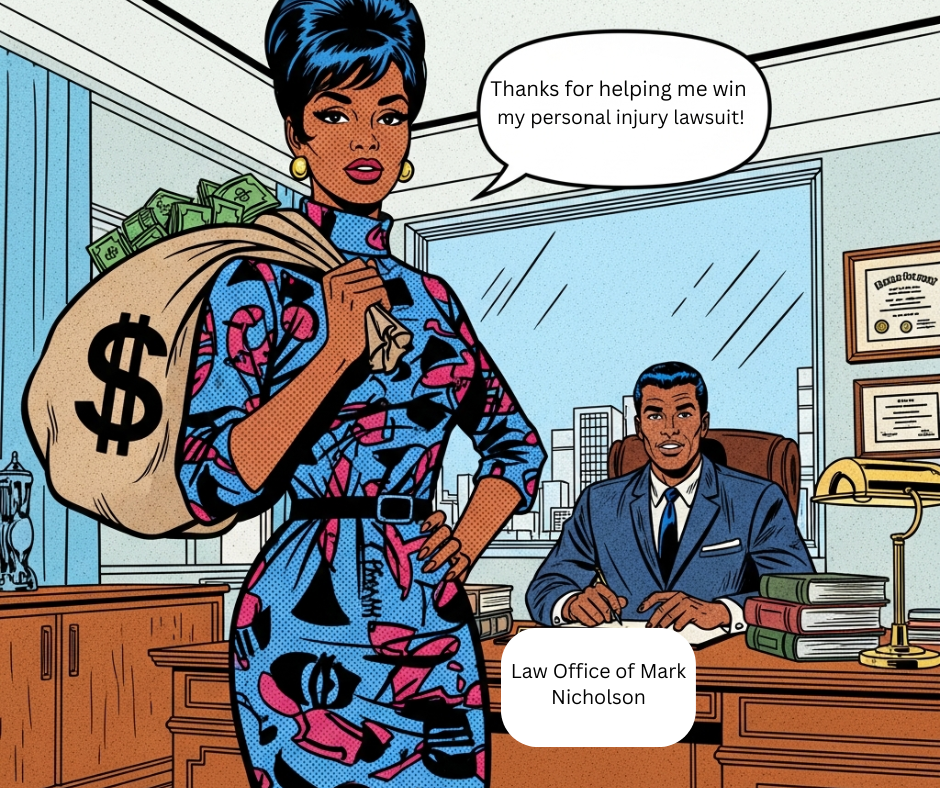
So, what exactly is a personal injury settlement? Think of it as a formal, out-of-court agreement between you (the injured person) and the party responsible for your harm—which is almost always their insurance company.
This agreement cuts to the chase: the insurer pays an agreed-upon amount of money, and in return, you agree to give up your right to sue them over the incident. It's a final resolution.
It's best to view a settlement as a private resolution. Instead of a public courtroom battle where a judge or jury holds your fate in their hands, a settlement is a structured negotiation aimed at reaching a mutual understanding.
The process involves you, the at-fault party's insurance company, and your respective attorneys. The goal is simple: agree on a fair compensation amount that covers your losses without the time, expense, and sheer unpredictability of a trial.
Why Settlements Are the Common Path
The vast majority of personal injurycases never see the inside of a courtroom. In fact, research shows that about 95% of personal injury cases are settled before they ever get to trial. This statistic alone highlights just how central negotiation is to the entire process.
But why is that? It comes down to a few powerful reasons that make settling a better option for both sides.
Here's a quick look at why most people choose to settle:
The benefits of settling often outweigh the risks of going to court. A trial is a gamble, plain and simple. Let's dig into why a settlement usually makes more sense.
Certainty and Control
A settlement offers a guaranteed outcome. You and the insurer agree on a specific number, which completely eliminates the risk of a jury awarding you far less than you deserve—or worse, nothing at all. You control the final decision.
Reduced Stress
Court proceedings are emotionally and mentally draining. A settlement helps you avoid the anxiety of testifying in front of strangers, facing aggressive cross-examinations, and navigating the lengthy, formal court process.
Faster Resolution
Trials can drag on for years, caught up in crowded court dockets and endless delays. Settlements are almost always resolved much more quickly, which means you get the compensation you need to move on with your life sooner.
Lower Costs
Litigation is incredibly expensive. Avoiding a trial means sidestepping hefty court fees, expert witness costs, and other legal expenses that can eat away at your final recovery amount.
A settlement is fundamentally about risk management. Both you and the insurance company are weighing the potential costs and unpredictable outcomes of a trial and deciding that a negotiated agreement is the smarter, more efficient path forward.
Ultimately, a personal injury settlement is often the most practical way to achieve justice after an accident. It empowers you to play an active role in determining the outcome and provides a clear path to financial recovery so you can focus on healing.
How a Fair Settlement Value Is Calculated
Figuring out what your personal injury claim is actually worth isn't some guessing game where lawyers pull a number out of thin air. It's a detailed, methodical process. Every single loss you've suffered—financial, physical, and emotional—gets identified, categorized, and assigned a dollar value.
Think of it like creating a comprehensive invoice for everything the accident cost you. To do that, we have to separate your losses into two distinct buckets. Understanding these categories is the key to making sense of any settlement offer you might see.
The Foundation: Economic Damages
First up are economic damages, which lawyers sometimes call "special damages." These are the tangible, black-and-white financial hits that come with a paper trail. They're the most straightforward part of the calculation because we can prove them with receipts, bills, and pay stubs.
These costs create the solid foundation for your claim's value. There's very little room for an insurance adjuster to argue these numbers, because they represent actual money you've spent or lost because of your injury.
Common examples of economic damages include:
- Medical Bills: This is everything from the ambulance ride and ER visit to surgery, physical therapy, prescriptions, and any medical equipment you need.
- Lost Wages: If your injuries kept you out of work, you're owed compensation for every dollar of income you lost while recovering.
- Future Lost Earning Capacity: For severe injuries that permanently impact your ability to do your job or force you into lower-paying work, this calculation estimates the income you'll lose over your working life.
- Property Damage: Most often, this is the cost to repair or replace your car after an accident, but it can also cover any other personal property that was destroyed.
- Out-of-Pocket Expenses: This bucket catches everything else, like paying for rides to doctor's appointments or hiring someone for yard work you can no longer do yourself.
Calculating these damages means meticulously gathering and adding up every single expense. This total becomes the baseline for your settlement negotiation.
Valuing the Human Cost: Non-Economic Damages
The second category is non-economic damages, also known as "general damages." This is where things get more complex. These damages are meant to compensate you for the intangible, human cost of an injury—the kind of suffering that doesn't come with a price tag.
You can't get a receipt for your pain, but the impact it has on your life is undeniable and deserves to be compensated. This is where having an experienced attorney becomes absolutely critical; it's our job to build a persuasive case that puts a real value on what you've endured.
Non-economic damages are the legal system's way of acknowledging that an injury is far more than just a stack of medical bills. They are intended to provide compensation for the physical pain, emotional trauma, and massive disruption to your life caused by someone else's carelessness.
These damages can cover compensation for:
- Pain and Suffering: The physical pain, discomfort, and agony you've dealt with from the injury itself and through painful medical treatments.
- Emotional Distress: This covers the psychological fallout—anxiety, depression, fear, sleepless nights, and even PTSD that stems from a traumatic event.
- Loss of Enjoyment of Life: You deserve compensation if you can no longer participate in hobbies, sports, or daily activities that once brought you joy.
- Disfigurement or Permanent Scarring: For injuries that change your physical appearance, causing embarrassment or humiliation.
Because these damages are subjective, attorneys and insurance companies needed a way to put a number on them. The most common tool for this is the "multiplier method."
Using the Multiplier Method
The multiplier method gives us a structured way to estimate non-economic damages. It's pretty simple in concept: you take the grand total of your economic damages and multiply it by a number, usually somewhere between 1.5 and 5.
Which multiplier we use depends entirely on how severe your injuries are and the overall impact they've had on your life.
- A lower multiplier (1.5 to 2) might apply to more minor injuries, like a sprain that heals up in a few months with no lasting effects.
- A higher multiplier (4 to 5) is reserved for catastrophic injuries—think traumatic brain injuries or spinal cord damage—that cause permanent disability, chronic pain, and a total loss of your previous quality of life.
Let's say your medical bills and lost wages (economic damages) add up to $20,000. If your injuries were moderately severe, your attorney might argue for a multiplier of 3. That would put your non-economic damages at $60,000 ($20,000 x 3).
Your total starting point for settlement talks would then be $80,000 ($20,000 + $60,000). Of course, to see how negligence principles tie into all this, you can learn more about Indiana's tort claim law in our detailed guide. It's important to remember this is just a starting point for negotiations, not a guaranteed final number.
Key Factors That Influence Your Settlement
While the damage calculation formula gives us a starting number, it's really just the beginning of the story. Several real-world factors can dramatically swing the final value of your personal injury settlement up or down.
Think of these as the unique details of your case that an insurance adjuster will pick apart. They're looking for any reason to either justify a higher payout or, more often, argue for a much lower one. Understanding these elements is what separates a strong, compelling claim from one that an insurance company can easily tear down.
The Severity and Permanence of Your Injuries
This is the big one. It's the single most important factor, hands down. A minor sprain that heals completely in six weeks will always be valued much lower than a catastrophic injury, like a spinal cord injury, that leaves someone with a permanent disability.
The more severe and long-lasting the injury, the higher the settlement value. It's that simple. Insurance companies and juries have to look at the long-term ripple effects on your life. An injury that causes chronic pain, will require future surgeries, or stops you from ever returning to your career is going to dramatically increase the value of your case.
The Strength and Clarity of Your Medical Records
Your medical records are the foundation of your entire claim. They are the objective, black-and-white evidence that proves what you went through and connects it directly back to the accident. If your records are vague, inconsistent, or have big gaps, you're giving the insurance company a massive opening to challenge your claim.
Strong medical evidence always includes:
- Immediate Treatment: Getting checked out right after the accident shows you took your injuries seriously. If you wait weeks, an adjuster will argue that something else must have caused your pain.
- Consistent Follow-Through: When you follow all your doctor's orders—making it to every physical therapy session, taking your medications—it shows that your injuries are real and significant.
- Detailed Doctor's Notes: Clear, specific notes from your physician detailing your pain levels, physical limitations, and prognosis are incredibly powerful. They turn your personal experience into hard proof.
Without clear, consistent, and comprehensive medical records, your claim is just your word against the insurance company's. This documentation turns your personal experience into undeniable proof.
The Clarity of Fault and Available Evidence
How clearly can you prove the other party was responsible? A case with rock-solid, indisputable evidence of fault is worth far more than one where liability is a messy "he said, she said" situation.
Evidence is what turns an accusation into a fact. A case backed by a police report that faults the other driver, eyewitness testimony, and dashcam footage is worlds stronger than one built on conflicting stories. The less room an insurer has to argue about who was at fault, the stronger your negotiating position becomes.
The table below breaks down some of the most common factors we see in personal injury cases and how they can pull your final settlement amount in one direction or the other.
Factors Impacting Settlement Value
| Factor | Impact on Settlement | Example |
|---|---|---|
|
Severity of Injury |
Increases |
A traumatic brain injury will result in a significantly higher settlement than a broken arm. |
|
Clear Medical Records |
Increases |
Consistent medical treatment with detailed doctor's notes provides undeniable proof of injury. |
|
Undisputed Fault |
Increases |
Dashcam footage showing the other driver running a red light makes it hard to deny liability. |
|
High Medical Bills |
Increases |
Extensive surgeries, hospital stays, and long-term physical therapy raise the economic damages. |
|
Lost Wages |
Increases |
Proof of being unable to work for months or years directly adds to the settlement value. |
|
Comparative Fault |
Decreases |
If you were found 20% at fault for speeding, your final award is reduced by 20%. |
|
Pre-existing Injuries |
Decreases |
An insurer may argue that an old back injury, not the accident, is the true source of your pain. |
|
Inconsistent Statements |
Decreases |
Contradicting your own story or the medical records undermines your credibility. |
|
Gaps in Treatment |
Decreases |
Waiting weeks to see a doctor gives the insurer an opening to question the injury's cause. |
Understanding these moving parts is key, because insurance adjusters are trained to use every single one of them to their advantage.
How Indiana's Comparative Fault Rule Affects Your Claim
Even when the other party was clearly the main cause of the accident, your own actions can come back to haunt your settlement. Indiana follows a modified comparative fault rule, which is a legal way of saying that your total compensation gets reduced by your percentage of blame.
Let's say your total damages are calculated to be $100,000. If a jury decides you were 20% at fault—maybe you were speeding just slightly—your final award is slashed by that 20%, leaving you with $80,000.
Here's the critical part: under Indiana law, if you are found to be 51% or more at fault, you get nothing. Zero. You are completely barred from recovering any compensation. Insurance adjusters are masters at finding ways to shift blame onto you to save their company money, making this a major battleground in almost every negotiation.
What's a Typical Personal Injury Settlement Payout?
It's the first question almost everyone asks after an accident: "What's my case actually worth?" You've probably seen those online "settlement calculators" that promise a quick, easy number. It's tempting to plug in a few details and get an instant answer.
But here's the unvarnished truth: those calculators are little more than a marketing gimmick. There's no magic formula, no one-size-fits-all answer. The settlement for your neighbor's minor fender-bender has absolutely nothing to do with what you should expect for a serious slip and fall that required surgery. Getting your head around what's realistic is the first—and most important—step.
The Real World of Settlement Numbers
Instead of relying on generic calculators, let's look at what the data actually shows. Personal injury settlement amounts are all over the map. Some cases wrap up for a few thousand dollars to cover a trip to the ER and a few follow-up visits. Others, involving life-altering injuries, can climb into the millions.
So, where do most cases land? Recent industry data shows the vast majority fall somewhere in the middle. Most personal injury claims resolve for somewhere between $3,000 and $75,000. A deeper dive from a Forbes analysis found that about half of all settlements are $24,000 or less, with the median payout hovering around $31,000. You can explore more of the latest numbers and what they mean in this report on personal injury claim trends.
These numbers aren't a crystal ball. They're a reality check. While the multi-million dollar verdicts grab headlines, the day-to-day reality for most claims is far more grounded. The objective isn't to hit some "average" number; it's to calculate a figure that is fair and just for your specific losses.
Why No Two Cases Are the Same
What's the difference between a $10,000 settlement and a $100,000 one? It all boils down to the unique details of your damages—the concrete financial costs and the very real, but less tangible, human suffering.
Let's paint a picture with two different scenarios:
- Scenario A: The Minor Whiplash Case. A driver gets rear-ended at a stoplight. They go to urgent care, do a few weeks of physical therapy, and miss three days of work. Their medical bills hit $4,000, and lost wages add up to $600, for total hard costs of $4,600. The injury was painful and disruptive, but it resolved quickly with no lingering issues. In a case like this, the final settlement would likely land somewhere in the $10,000 to $15,000 range.
- Scenario B: The Slip and Fall Requiring Surgery. A shopper slips on a wet, unmarked floor in a grocery store. The fall results in a herniated disc that needs surgical repair. Medical bills climb to $65,000, and they're unable to work for six months, losing $25,000 in income. They now live with chronic pain and can no longer enjoy hobbies they once loved. With $90,000 in clear economic damages and a severe, life-altering injury, the starting point for this personal injury settlement negotiation is drastically different, almost certainly pushing well into six figures.
These examples make it clear why a professional, thorough evaluation is the only way to understand your claim's true potential. An experienced attorney doesn't guess or rely on averages. They meticulously build your case piece by piece—using medical records, expert opinions, financial documents, and your personal story—to demand the full and fair value you are owed.
The Settlement Process From Start to Finish
Navigating a personal injury settlement can feel like you've been handed a complex puzzle without the box. You know what the final picture is supposed to look like—fair compensation—but figuring out how all the pieces fit together can be overwhelming. Let's walk through the entire journey, breaking it down into a clear, manageable timeline so you can move forward with confidence.
Everything hinges on reaching a critical milestone called Maximum Medical Improvement (MMI). This doesn't necessarily mean you're 100% healed. It just means your condition has stabilized to the point where your doctors have a clear picture of your long-term prognosis. We can't start talking numbers until we know the full extent of your injuries and what your future medical needs look like.
Stage 1: Assembling Your Evidence
Once you've hit MMI, the real work begins. We shift into an intensive evidence-gathering phase, collecting every document and detail that tells the story of your accident and its impact on your life. Think of this as building the foundation of your entire claim—the stronger it is, the better the outcome.
We'll meticulously collect and organize everything, including:
- Complete Medical Records: This is more than just the big bills. It's every single doctor's note, therapy session report, prescription receipt, and surgical summary.
- Proof of Lost Income: We'll need pay stubs, tax returns, and official letters from your employer detailing every hour of work you missed because of your injuries.
- Accident-Related Documentation: The official police report is just the start. We'll also gather photos and videos from the scene and track down contact information for any witnesses.
- Personal Documentation: This is your story. A journal detailing your daily pain, your emotional state, and all the ways your life has been turned upside down can be incredibly powerful.
This systematic collection ensures no loss is overlooked. Every single detail, financial or personal, will be backed by solid proof.
Stage 2: Crafting the Demand Letter
With all your evidence compiled, it's time to officially present your claim to the insurance company. This isn't just a simple letter asking for money. It's a formal, persuasive legal document called a demand letter. It's our opening argument, laying out the facts, explaining why their client is at fault, and justifying the compensation we're seeking.
A strong demand letter does five key things:
- It clearly establishes why the other party was at fault.
- It provides a detailed narrative of the accident and the injuries you suffered.
- It itemizes all your economic damages (medical bills, lost wages) with the documents to prove it.
- It explains the basis for your non-economic damages (pain, suffering, emotional distress).
- It concludes with a specific, calculated monetary demand for your total personal injury settlement.
This document is what officially kicks off the negotiation process.
Stage 3: The Negotiation Phase
After the insurance company receives our demand, their adjuster will review everything and come back with a counteroffer. Be prepared: this first offer is almost always shockingly low. Don't let it discourage you. This is a standard tactic—the opening move in a long negotiation dance.
What follows is a period of back-and-forth between your attorney and the adjuster. We'll push back against their lowball offers with hard evidence and strong legal arguments, working to bring them up to a fair number. This stage can take weeks or even months. If things stall, mediation is often the next step to help find some common ground. For a closer look at how that works, you can read our guide on understanding the mediation process.
Stage 4: Finalizing the Settlement
Once we've reached an agreement on a final number, the finish line is in sight. Before any money changes hands, you will need to sign a release form. This is a critical legal document. By signing it, you agree that the settlement amount is the final and full payment, and you give up any right to pursue future legal action against the at-fault party for this incident.
After the release is signed, the insurance company sends the settlement check, which typically goes to your attorney's office. The funds are deposited into a special trust account. From there, we'll pay any outstanding liens (like medical bills or health insurance claims) and deduct legal fees.
Finally, the remaining balance is disbursed directly to you. This concludes the process, giving you the financial resources you need to close this chapter and start focusing on your future.
Your Personal Injury Settlement Questions Answered
Even after you get the basics of a personal injury settlement, it's completely normal to have a ton of questions about how it all works in the real world. The whole process can feel murky, full of unknowns that are totally out of your control. Here, we'll give you direct, straightforward answers to the most common questions we hear from clients every day, hopefully clearing up the path ahead.
How Long Does a Personal Injury Settlement Take?
This is almost always the first thing people ask, and the honest-to-goodness answer is: it depends. There's simply no magic number or universal timeline.
Sure, a really simple case—think clear evidence, zero argument over who's at fault, and minor injuries that heal up fast—might wrap up in six to nine months. But those are the exceptions, not the rule.
Most cases, especially the ones involving serious or permanent injuries, arguments over liability, or multiple parties, can easily stretch out for one to three years, sometimes even longer. The biggest factor driving this timeline is reaching what we call Maximum Medical Improvement (MMI). Until your doctors can say with confidence that your condition is stable and they know what your long-term prognosis looks like, we can't possibly know the full value of your claim.
Rushing to settle before you hit MMI is one of the single worst mistakes you can make. It's tempting to grab a quick check, I get it. But doing that almost guarantees you'll accept far less than you're owed, leaving you on the hook for future medical bills all by yourself.
Do I Have to Pay Taxes on My Settlement?
This is a huge source of confusion for people, but the IRS is generally on your side when it comes to personal injury claims.
For the most part, the money you get for your physical injuries and medical bills is not considered taxable income. That means the core of your settlement—the funds meant to cover hospital stays, physical therapy, and your pain and suffering—is yours to keep, completely tax-free.
However, there are a few exceptions where parts of a settlement can be taxed.
- Lost Wages: If a portion of your settlement is specifically for the income you lost while out of work, the IRS treats that just like a regular paycheck. It's subject to income tax.
- Punitive Damages: On the rare occasion that punitive damages are awarded (meant to punish the defendant for truly awful behavior), that money is almost always taxable.
- Emotional Distress: Compensation purely for emotional distress, if it isn't tied directly to a physical injury, might also be considered taxable income.
Because the tax rules can get tricky and depend on the specifics of your award, it's always smart to talk with your attorney or a tax professional to see how it all applies to your final personal injury settlement.
Can I Negotiate a Settlement Without a Lawyer?
Legally speaking, yes, you absolutely have the right to negotiate directly with the insurance company on your own. But for anything more than a tiny fender-bender with no injuries, it's a decision that will almost certainly cost you a staggering amount of money in the end.
Insurance adjusters are professional negotiators. Their entire job is to protect their company's profits by paying you as little as humanly possible. They are trained in specific tactics to poke holes in your claim, downplay your injuries, and pressure you into taking a quick, lowball offer before you know what your case is truly worth.
Without a deep understanding of Indiana law, the rules of evidence, and how settlements are actually valued, you're walking into that fight at a massive disadvantage. Study after study has shown that accident victims who have a lawyer get substantially higher settlement offers—often several times higher—than people who try to handle it themselves. That holds true even after you account for attorney's fees.
For any claim that involves significant medical bills, lost time from work, or long-term health issues, hiring an experienced lawyer isn't just a good idea—it's the most powerful step you can take to level the playing field.
What Happens If We Cannot Agree on a Settlement?
When negotiations stall and the insurance company digs in its heels with an unfair offer, the fight is far from over. This is simply when the process moves to the next level.
The first step is usually to file a lawsuit. This formal legal action tells the insurance company in no uncertain terms that you are serious about getting the full value you deserve. It's important to know that filing a lawsuit doesn't mean you're automatically going to trial. In fact, the vast majority of cases that reach this point still settle long before anyone sees the inside of a courtroom.
Filing suit opens up the "discovery" phase, where both sides can formally demand evidence from one another, like documents and sworn testimony (called depositions). This process often brings new facts to light that strengthen your position and can give the insurer a serious push to get back to the negotiating table.
If that still doesn't work, the next step is often mediation. This is a more formal negotiation where a neutral third-party mediator helps both sides find a middle ground. A trial is truly the last resort, the final option when every other path to a fair personal injury settlement has been exhausted.
Navigating the complexities of a personal injury claim requires experience, dedication, and a deep understanding of Indiana law. At the Law Office of Mark Nicholson, we provide the aggressive advocacy needed to fight for the compensation you deserve. If you've been injured and are unsure of your next steps, contact us today for a free, no-obligation consultation to discuss your case. Learn more about how we can help at https://www.marknicholsonlaw.com.


Comments
There are no comments for this post. Be the first and Add your Comment below.
Leave a Comment