
Indiana Assault and Battery Laws Explained
Even though most people use "assault and battery" as a single phrase, they're two distinct concepts in Indiana law. In simple terms, assault is the threat that makes someone fear they're about to be harmed, while battery is the actual unwanted physical contact.
Getting this difference straight is the first and most important step in understanding what you might be up against.
What Is the Difference Between Assault and Battery?
Let's use a quick example. Imagine someone is angrily waving a baseball bat at you and threatening to hit you. That act—the threat that creates a genuine fear for your immediate safety—is the assault.
Now, if that person swings the bat and actually hits you, even just a light tap, that physical contact is the battery. It's the follow-through.
This separation is critical in criminal law because you can have one without the other. You can absolutely be charged with assault without ever laying a hand on someone. Likewise, you could be charged with battery even if there was no warning or threat beforehand. The law views the fear of harm and the act of harm as two separate offenses.
The Core Elements of Each Offense
To make this even clearer, let's break down what a prosecutor needs to prove. While Indiana law has specific statutes for battery, the legal idea of assault often falls under other charges like intimidation. For our purposes, we'll stick to the classic legal distinction.
- Assault (The Threat): This is all about creating a credible fear. It involves an intentional act that puts a reasonable person in apprehension of imminent harmful or offensive contact. Waving a fist in someone's face, lunging at them, or verbally threatening to hurt them while looking like you can back it up are all classic examples.
- Battery (The Contact): This is where the threat becomes reality. It requires an intentional, unwanted physical touch. A common misconception is that the contact has to cause a serious injury. It doesn't. A rude, angry shove is more than enough to qualify as battery.
A good way to think about it is like a thunderstorm. The assault is the dark clouds and menacing thunder that make you think you're about to get struck. The battery is the lightning bolt that actually makes contact.
Why This Distinction Matters in Indiana
In Indiana, the criminal code formally defines "battery," while the concept of "assault" is usually handled through charges like intimidation. But the principle is the same and makes a huge difference in your case. The distinction helps determine the exact charges you're facing and how serious they are.
For instance, someone who only makes a threat might face a misdemeanor intimidation charge. But the person who follows through with physical contact is looking at a battery charge, which can range from a misdemeanor all the way to a serious felony, depending on the details. Adding physical contact almost always escalates the legal consequences.
To give you a quick reference, here's a simple breakdown of the two concepts:
Assault vs. Battery at a Glance
| Element | Assault (The Threat) | Battery (The Contact |
|---|---|---|
|
Nature of the Act |
Creating fear of imminent harm |
Unwanted physical touching |
|
Physical Contact |
Not required |
Required |
|
Key Element |
The victim's reasonable apprehension or fear |
he offensive or harmful contact itself |
|
Common Example |
Shaking a fist and threatening to punch someone |
Actually punching the person |
|
Indiana Charge |
Often prosecuted as Intimidation |
Prosecuted as Battery |
This table helps illustrate the fundamental split between the threat and the act.
Understanding this foundational difference is essential. It shapes every part of your case, from the specific charges filed by the prosecutor to the defense strategies we can build to protect your rights. Having this clear mental model is the key to navigating the complexities of an assault and battery case.
How Indiana Classifies Battery Charges and Penalties
In Indiana, an assault and battery charge isn't a simple, one-size-fits-all offense. Think of it like a ladder. The consequences climb higher and higher based on the specific circumstances of the incident. The base charge might be minor, but certain "aggravating factors" can quickly escalate the situation, making the potential penalties much more severe.
The journey starts with a Class B Misdemeanor. This is the most basic form of battery, applying to any knowing or intentional touch done in a "rude, insolent, or angry manner." What's key here is that an actual injury isn't required. A simple, angry shove in a bar or an unwanted, forceful grab of someone's arm could easily fit this description. A conviction could mean up to 180 days in jail and a $1,000 fine.
This infographic is a great way to visualize the core difference between the threat (assault) and the physical act (battery).
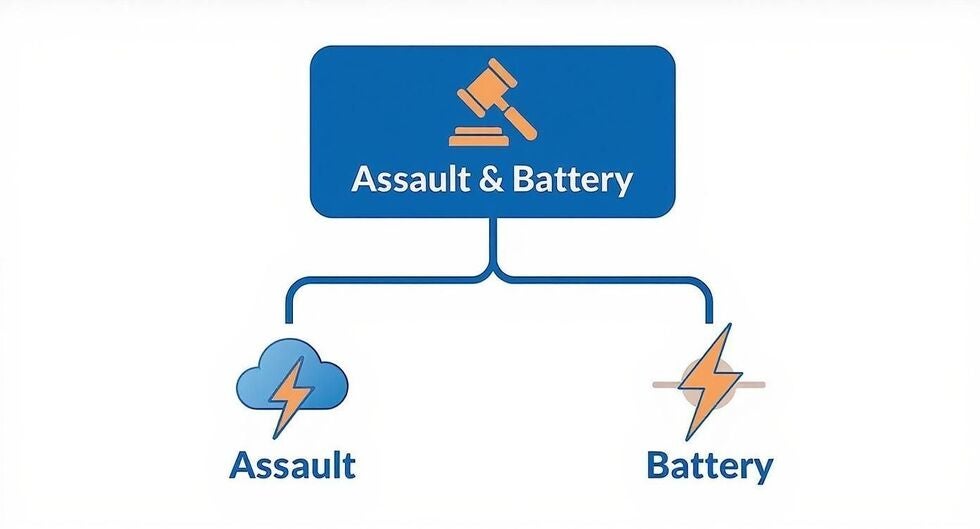
As you can see, while people often use the terms interchangeably, assault is the storm cloud of fear, while battery is the lightning strike of actual contact. They are distinct legal concepts that lead to different charges.
When a Misdemeanor Gets More Serious
The charge quickly jumps to a Class A Misdemeanor if that same rude, insolent, or angry touch results in any bodily injury. This is an incredibly common scenario in physical fights. Even a seemingly minor injury—a bruise, a scrape, or a small cut—is enough to elevate the charge, doubling the potential jail time to up to one year and cranking the maximum fine up to $5,000.
This is where the tiny details of what happened become critical. The line between a Class B and a Class A misdemeanor often comes down to whether the prosecutor can prove that an injury was a direct result of the contact.
The Jump from Misdemeanor to Felony Battery
The most significant leap in severity happens when a battery charge crosses into felony territory. This is where those "aggravating factors" come into play, and they can dramatically change your life. A battery charge gets bumped up to a felony for several reasons, all of which reflect a greater perceived danger to the public.
These game-changing factors include:
- Serious Bodily Injury: If the battery causes extreme pain, knocks someone unconscious, results in permanent disfigurement, or leads to the loss of a limb or organ, it becomes a Level 5 Felony. A punch that breaks someone's jaw is a classic example.
- Use of a Deadly Weapon: Committing a battery with anything considered a deadly weapon, like a knife or a gun, automatically makes it a Level 5 Felony, no matter how severe the injury was.
- Victim's Status: The law gives extra protection to certain people. Committing battery against a public safety official (like a police officer or EMT), a child under 14, or someone with a known mental or physical disability can trigger felony charges.
A felony conviction is life-altering. It can strip you of your right to vote, own a firearm, and make it incredibly difficult to find a good job. Understanding the specific circumstances that turn a simple battery into a felony is the first step in building a powerful defense. You can explore our detailed guide to learn more about what is felony battery in Indianaand how these serious cases are prosecuted.
Understanding the Range of Felony Charges
Indiana law doesn't stop at just one "felony battery" charge. It breaks them down into different levels, each with its own sentencing range. A Level 5 Felony, for example, can land you in prison for one to six years. But the charges can climb much higher—all the way to a Level 2 Felony if the battery results in the death of a child under 14.
Interestingly, while the news might make you think violent crime is constantly on the rise, some data shows a different picture. The reported aggravated assault rate in the first half of 2025 was actually about 5% lower than it was during the same period in 2019, suggesting a potential post-pandemic normalization. This data highlights that while every individual charge is serious, looking at broader trends can provide useful context.
Ultimately, classifying a battery charge in Indiana is a highly detailed process. It all boils down to the specific facts: who was involved, what injuries happened, and whether any of those aggravating factors were present. This complexity is exactly why you need a skilled legal advocate on your side to scrutinize every piece of evidence.
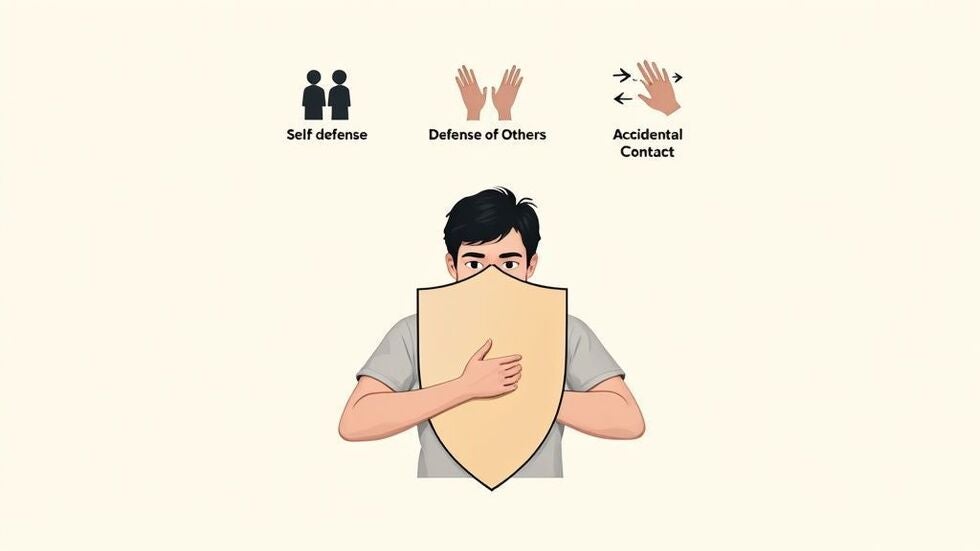
Being accused of a crime like assault and battery can feel like the world is closing in. It's a heavy weight to carry. But it's critical to remember that an accusation is not a conviction. The prosecution has the entire burden of proving every single element of the charge beyond a reasonable doubt.
A skilled defense attorney's job is to dismantle their case, piece by piece. This often starts by building a powerful affirmative defense. These defenses aren't just about saying "I didn't do it." Instead, they provide a legal justification for your actions, showing the court precisely why you shouldn't be held criminally liable. Understanding these strategies is the first step toward getting your life back.
Protecting Yourself With Self-Defense
The most common and widely recognized defense against a battery charge is self-defense. This isn't just a movie trope; it's a fundamental legal principle acknowledging your right to protect yourself from harm. But it's not a blank check to use any amount of force you want.
The entire argument for self-defense hinges on the concept of proportionality. In simple terms, the force you used to defend yourself must have been reasonable and proportionate to the threat you were facing at that moment.
Think about it this way: someone shoves you during a heated argument. A single shove back to create space might be seen as proportional. But if you respond to that same shove by pulling out a weapon, that's almost certainly excessive. That kind of overreaction would destroy a self-defense claim.
To successfully argue self-defense, we have to show the court that:
- You genuinely and reasonably believed you were in immediate danger of bodily harm.
- The force you used was no more than what was necessary to stop that harm.
- You weren't the one who started the fight or provoked the other person.
The Right to Defend Others and Property
The principles of self-defense don't just apply to you. You also have the right to use reasonable force to protect someone else from getting hurt. This is known as the defense of others.
For example, if you see a stranger being attacked and you step in, pushing the attacker away to stop the assault, this defense would likely apply. Just like with self-defense, the key is that the force you use has to be proportional to the threat the other person was facing.
Indiana law also recognizes the defense of property. You're allowed to use reasonable force to stop someone from unlawfully trespassing on or damaging your property. It's crucial to understand, though, that the law places a much higher value on human life than on property. Using deadly force is almost never justified just to protect property.
A common mistake is thinking any action is justified to protect what's yours. The law demands a measured response. You can't cause serious injury to someone for simply cutting across your lawn, but you may be justified in physically removing a trespasser who refuses to leave your home.
Challenging the Element of Intent
Every battery charge in Indiana requires the prosecutor to prove the physical contact was done knowingly or intentionally. This opens up another powerful defense strategy: arguing the contact was completely accidental. Life is messy, and not every physical contact that results in an injury is a crime.
Picture a crowded concert. Someone accidentally bumps into another person in the crush of the crowd, causing them to stumble and scrape their knee. Yes, there was contact, and yes, there was a minor injury. But there was absolutely no criminal intent. It was an accident, plain and simple.
A good defense attorney can attack the prosecution's claims about intent by:
- Highlighting chaotic or crowded environmental conditions that made contact unavoidable.
- Presenting evidence that your actions were completely unintentional.
- Using witness testimony to paint a clear picture of the accidental nature of the contact.
By creating reasonable doubt about whether you actually intended to touch someone in a rude, insolent, or angry way, the entire foundation of the state's case can crumble. This is often a make-or-break strategy in assault and battery cases where the circumstances are murky.
Getting arrested for assault and battery can feel like you've been dropped into a maze blindfolded. The rules are confusing, the language is foreign, and the stakes couldn't be higher. Knowing what's coming next can make a huge difference, helping you stay calm and make smarter decisions for your future.
The entire process kicks off the moment you're arrested. From there, you're taken for booking, which involves taking your personal information, fingerprints, and a mugshot. While it's a standard procedure, this is the step that officially pulls you into the criminal justice system.
Right after booking, you'll face the initial hearing, which is sometimes called an arraignment. This is your first time in front of a judge, and it's a critical moment in your case.
The First Court Appearance and Beyond
Several important things happen during the initial hearing. The judge will officially read the battery charges filed against you, go over your constitutional rights, and decide on bail. Bail is the amount of money you have to post to get out of jail while your case moves forward.
A sharp defense lawyer can make a big impact here by arguing for a lower bail amount or even for your release on your "own recognizance" (meaning no payment is needed), based on your ties to the community and other factors.
Once the initial hearing is over, your case moves into the pre-trial phase. This is where most of the heavy lifting happens, often behind the scenes.
- Discovery: This is the formal process where the prosecution is legally required to hand over all of its evidence against you. We're talking police reports, witness statements, body cam footage, and any other recordings. Your attorney will comb through every single document looking for cracks in their case.
- Pre-Trial Motions: Based on what turns up in discovery, your lawyer might file motions to throw out evidence that was collected illegally. If the state's case has major flaws, a motion to dismiss the charges altogether might be possible.
The discovery phase isn't just about seeing what the prosecutor has; it's about taking apart their entire strategy piece by piece. Finding one contradiction in a police report or a shaky witness statement can completely reshape an assault and battery case.
Plea Negotiations and Preparing for Trial
The vast majority of criminal cases never see the inside of a courtroom. Instead, they're resolved through plea negotiations. Your defense attorney will talk with the prosecutor to see if a fair plea agreement is on the table.
This could mean pleading guilty to a less serious charge in return for a lighter sentence. For instance, a felony battery charge might get knocked down to a misdemeanor.
Deciding whether to take a plea deal is one of the biggest choices you'll have to make. Your attorney's job is to give you a clear, honest assessment of the evidence and the risks of going to trial, so you have all the information you need to make the right call.
If a plea deal isn't possible or isn't in your best interest, then your case is headed for trial. This is where the prosecutor must prove your guilt to a jury beyond a reasonable doubt. Your lawyer will be there to present your side of the story, cross-examine the state's witnesses, and fight for a "not guilty" verdict. Every single stage, from the arrest to a potential trial, demands careful and strategic planning.
Understanding Your Civil Liability After a Charge
An arrest for assault and battery doesn't just start a battle on one front; it opens the door to two completely separate legal challenges. While the state of Indiana pursues a criminal case against you, the alleged victim has every right to file their own civil lawsuit.
This means you could find yourself fighting in two different courtrooms over the exact same incident. It's essential to grasp how these two parallel tracks work to understand the full scope of your potential legal exposure.
The criminal case is about punishment. The prosecutor, representing the state, wants to prove you broke the law. A conviction could mean jail time, fines, and a criminal record that follows you for life. The civil case, on the other hand, is all about money. The alleged victim, now the "plaintiff," is suing you for financial compensation for the harm they claim you caused.
Criminal Punishment Versus Civil Compensation
In a civil lawsuit, the plaintiff isn't trying to send you to jail. Their goal is to recover damages—the legal term for the money they lost or suffered because of what happened. This compensation is meant to make them "whole" again, at least from a financial standpoint.
A plaintiff in a battery case can sue for several types of damages:
- Economic Damages: These are the straightforward, out-of-pocket costs. Think medical bills, therapy expenses, and any wages they lost from being unable to work.
- Non-Economic Damages: This category is more subjective, covering the intangible losses that don't come with a receipt. It's compensation for physical pain, emotional distress, and mental anguish.
- Punitive Damages: In rare cases, a court might award punitive damages. These aren't about compensating the victim but are designed to punish the defendant for especially reckless or malicious behavior and to deter anyone else from doing the same.
To see how these issues often intertwine, you can read more about domestic violence and battery cases, which frequently involve both criminal charges and civil lawsuits.
Different Courts, Different Rules
Here's the most critical concept to understand: you can be found not guilty in criminal court and still lose the civil case. It happens all the time. Why? Because the two courts operate on completely different standards of proof.
In criminal court, the prosecutor must prove your guilt "beyond a reasonable doubt." This is the highest standard in our legal system. It means the jury must be virtually certain you committed the crime. In civil court, the plaintiff only needs to prove their case by a "preponderance of the evidence."
This much lower standard simply means they have to show it's more likely than not that you are responsible for their injuries. Think of it as just tipping the scales to 51% certainty.
Imagine a bar fight where you claim self-defense. In the criminal trial, the jury might have some doubt about who really started it. Because of that reasonable doubt, they find you not guilty. But in the civil trial, that same jury might decide that, while they weren't 100% sure, it was slightly more likely you were the aggressor. That's enough to hold you financially liable for the other person's medical bills.
This dual-track system means that an acquittal in criminal court is a huge victory, but it doesn't automatically mean your legal troubles are over.
When you're facing an assault and battery allegation, it can feel like the walls are closing in. But it's critical to remember one thing: a charge is not a conviction. The single most important step you can take right now is to bring in skilled legal representation.
A dedicated defense attorney does a lot more than just show up for court dates. We get to work immediately, building a proactive, strategic case designed to pick apart the prosecution's arguments from day one.
Digging Deeper Than the Police Report
Our process always starts with a deep dive into the evidence. We launch our own independent investigation, going far beyond what's in the initial police report. This often means tracking down and re-interviewing witnesses, visiting the scene of the incident to spot details others overlooked, and uncovering evidence that law enforcement may have missed entirely.
The official story is just that—one side of the story. Our job is to find the whole truth.
Scrutinizing the Prosecution's Case
Police reports and witness statements are never as solid as they seem. They're often filled with inconsistencies, honest mistakes, or subjective opinions that are presented as hard facts. A huge part of building your defense is meticulously taking apart every piece of the prosecution's evidence.
We hunt for the weaknesses that create reasonable doubt. Things like:
- Contradictions between what different witnesses claim they saw.
- Procedural errors made by law enforcement during the arrest or investigation.
- A total lack of physical evidence to back up the accuser's story.
By finding these flaws, we can effectively challenge the credibility of the state's entire case. An experienced lawyer can often use these weaknesses as leverage during negotiations with the prosecutor, which can lead to reduced charges or even a complete dismissal before you ever see the inside of a courtroom.
A strong defense isn't about reacting to the prosecutor's moves; it's about controlling the narrative. We aim to expose the holes in their case so thoroughly that their argument falls apart.
Crafting a Powerful Legal Strategy
Once we have a complete picture of the facts, we build a defense strategy that fits your unique situation. This isn't a one-size-fits-all process. Maybe it involves proving you acted in self-defense. Or perhaps we can demonstrate the contact was accidental and you never had any criminal intent. In other situations, it's a case of mistaken identity. Every assault and battery case is different, and each one demands its own distinct approach.
Ultimately, protecting your future requires more than just knowing the law—it demands a skillful and aggressive legal strategy. To see the difference experience makes, you can learn more about the benefits of hiring an experienced Indianapolis criminal battery defense attorney and see how a dedicated firm will fight to protect your rights at every turn.
We work to negotiate the best possible outcome, whether that means securing a favorable plea agreement or fighting for your acquittal at trial. Your defense starts now.
Frequently Asked Questions About Battery Charges
When you're facing a serious charge like battery, your mind is probably racing with questions. The legal world is complicated, and Indiana's laws have nuances that can trip people up. Getting clear, straightforward answers is the first step toward figuring out your next move.
Here are a few of the most common questions we hear from clients, broken down into simple terms.
Can I Be Charged With Battery If No One Was Hurt?
Yes, you absolutely can. This is a huge misconception that gets a lot of people in trouble. In Indiana, a battery charge isn't about whether you caused an injury—it's about the touch itself.
The law focuses on a knowing or intentional touch done in a rude, insolent, or angry manner. A frustrated shove, an aggressive finger-poke, or grabbing someone's arm in anger can be enough to land you a Class B Misdemeanor charge. The whole case hinges on that unwanted contact and the intent behind it, not the result. Of course, if that same touch does cause pain or any kind of injury, the charge gets bumped up to a more serious Class A Misdemeanor.
What Is the Difference Between Battery and Intimidation?
It's easy to see why these get confused, but the law draws a very clear line between them. The difference comes down to one thing: physical contact.
Battery is all about the physical act. It requires an actual, unwelcome touch.
Intimidation, on the other hand, is about the threat of harm. Under Indiana Code, intimidation involves communicating a threat to scare someone into changing their behavior or to retaliate for something they've already done. There's no physical contact required. For example, telling a witness, "You'll regret it if you testify," is intimidation, not battery.
A simple way to think about it: Battery is doing something now. Intimidation is threatening to do something later. One is an act of contact, the other is an act of communication meant to create fear.
What Is My First Step After an Indiana Assault and Battery Arrest?
Your very first move is also your most important: use your constitutional right to remain silent. It might feel natural to try and explain what happened or defend yourself to the police, but don't. Anything you say can and will be twisted by the prosecution to build their case against you.
Politely but firmly tell the officers you are invoking your right to remain silent and that you want an attorney. Then, stop talking.
The second step is to call an experienced criminal defense lawyer right away. The time immediately following an arrest is critical. A good attorney will step in to protect you from making mistakes, argue for a reasonable bond at your initial hearing, and start digging into the facts of your case from day one. Acting fast is the single best thing you can do for your defense.
An accusation is not a conviction, but fighting an assault and battery charge requires immediate and strategic legal action. The team at the Law Office of Mark Nicholson is ready to build the aggressive defense you need. For a confidential consultation to discuss your case, visit us at https://www.marknicholsonlaw.com today.
To learn more about battery charges in Indiana, click Indiana Battery Defense Lawyer.


Comments
There are no comments for this post. Be the first and Add your Comment below.
Leave a Comment