
Free Criminal Law Consultation
Indianapolis Criminal Defense Lawyer
PROTECT YOUR RIGHTS AFTER YOUR FELONY OR MISDEMEANOR ARREST:
CHOOSE AN EXPERIENCED CRIMINAL DEFENSE LAWYER IN INDIANAPOLIS, IN
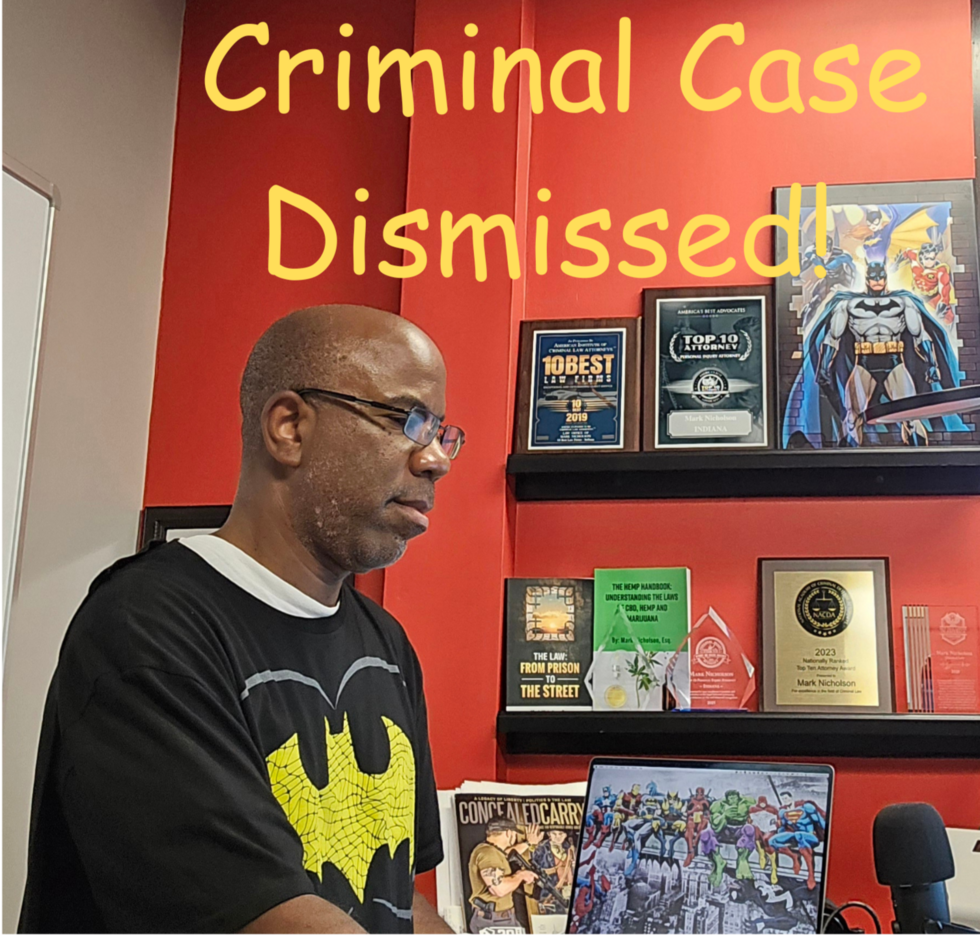
Arrested or Accused of a Crime in Indiana? Your Defense Starts Now.
A criminal charge can threaten your freedom, employment, family, reputation, finances, and future. Police and prosecutors may already be building their case. You need a defense lawyer who will investigate the facts, challenge unsupported conclusions, protect your constitutional rights, and prepare for court.
Attorney Mark Nicholson defends people accused of felonies and misdemeanors in Indianapolis, Marion County, and throughout Indiana. He handles the firm's criminal cases and brings a perspective few attorneys possess: he knows the justice system from both sides—from behind bars to becoming an Indiana trial attorney.
An arrest is not a conviction. The State must prove every element of the charge beyond a reasonable doubt. Attorney Nicholson examines what the evidence actually establishes—not merely what the probable-cause affidavit or police report claims.
Call 317-219-3402 to schedule a free 30-minute strategy session.
[Request a Confidential Case Review]
Available for new-client inquiries involving arrests, pending charges, active investigations, warrants, and urgent court dates.
What Should I Do After an Arrest in Indiana?
The decisions you make immediately after an arrest can affect the rest of your case.
-
Remain silent. Tell police clearly that you want to remain silent and speak with a lawyer. Do not try to talk your way out of the charge.
-
Do not consent to searches. Police may seek a warrant, but you do not have to volunteer consent to search your phone, vehicle, home, or belongings.
-
Do not discuss the case on recorded calls. Jail calls are generally recorded. Do not discuss facts, witnesses, evidence, or possible defenses.
-
Do not contact an alleged victim or witness. Follow every no-contact order, even when the other person initiates communication.
-
Do not delete evidence. Preserve messages, videos, photographs, social-media records, location data, receipts, and other relevant material.
-
Save your court paperwork. Keep the charging information, probable-cause affidavit, bond order, no-contact order, and notice of your next hearing.
-
Contact an Indiana criminal defense attorney promptly. Counsel may be able to address bond, preserve evidence, prevent an unnecessary interview, and begin investigating before memories fade or recordings disappear.
[Learn How to Post Bail in Indiana]
Criminal Cases We Defend
The Law Office of Mark Nicholson represents people facing serious criminal allegations, including the following.
Felonies and Misdemeanors
Indiana crimes are generally classified as felonies or misdemeanors. A misdemeanor can still bring jail, probation, fines, a criminal record, employment consequences, and restrictive court orders. A felony can result in a substantial prison sentence and the loss of important civil rights.
Attorney Nicholson evaluates the precise charge, offense level, alleged facts, criminal history, possible enhancements, and the evidence supporting each element.
[Review Indiana Sentencing Guidelines]
Battery and Domestic Battery
Battery cases often depend on disputed accounts of a fast-moving confrontation. Important issues may include self-defense, defense of another person, who initiated the encounter, whether the accused knowingly touched another person in a rude, insolent, or angry manner, whether injury occurred, and whether witnesses or video support the accusation.
Domestic battery charges can also produce immediate no-contact orders, firearm restrictions, housing problems, employment consequences, and related family-court proceedings.
[Learn About Domestic Battery Defense]
Murder and Violent-Crime Allegations
Murder and serious violent-felony cases demand immediate investigation. The defense may involve identification, self-defense, causation, intent, forensic evidence, firearm evidence, witness credibility, digital records, or the State's theory of what occurred.
Potential penalties are severe, and critical evidence can disappear quickly. Do not wait until the first major hearing to begin preparing.
[Learn About Indiana Murder Defense]
Gun and Firearm Charges
Indiana gun cases may involve alleged unlawful possession, possession by a serious violent felon, carrying a handgun, a firearm allegedly connected to another offense, constructive possession, self-defense, or a disputed claim that an object was legally a firearm.
The defense may examine ownership, location, access, fingerprints, DNA, photographs, video, witness observations, search-and-seizure issues, and whether the State can prove knowing possession.
[Learn About Indiana Gun Charge Defense]
Drug Charges
The firm defends allegations involving possession, dealing, manufacturing, prescription drugs, controlled substances, marijuana, searches of homes and vehicles, confidential informants, controlled buys, and constructive possession.
Drug cases frequently turn on the legality of a stop or search, who possessed or controlled the location, whether laboratory testing supports the charge, and whether the evidence proves an intent to deliver rather than personal possession.
[Learn About Indiana Drug Charge Defense]
Sex Crimes
Sex offense allegations can damage a person's name before trial begins. The firm defends charges involving rape, child molesting, sexual battery, sexual misconduct with a minor, child solicitation, child sexual abuse material, prostitution, and sex-offender registry violations.
These cases may require careful analysis of interviews, digital evidence, medical findings, DNA, identification, consent when legally available, motive, delayed reporting, and the statutory elements. Registration consequences must be evaluated before any plea is accepted.
[Learn About Indiana Sex Crimes Defense]
[Learn About Prostitution Defense]
[Learn About Failure-to-Register Defense]
OVWI and DUI
An Indiana operating-while-intoxicated allegation may threaten your driving privileges, employment, insurance rates, and freedom. The defense may examine the reason for the traffic stop, field-sobriety testing, chemical-testing procedures, observation periods, maintenance records, medications, medical conditions, and whether the State can prove operation and impairment.
[Learn About Indiana OVWI/DUI Defense]
Protective Orders and Related Criminal Allegations
Protective-order allegations may arise alongside domestic battery, stalking, harassment, invasion of privacy, or other criminal accusations. A protective order can affect housing, firearms, employment, parenting, and communication with family members.
The criminal and protective-order cases should be approached together so that testimony or filings in one proceeding do not unnecessarily damage the other.
Post-Conviction Relief
A conviction does not always end the legal process. Post-conviction relief may be available when a person claims a constitutional violation, ineffective assistance of counsel, an involuntary guilty plea, newly discovered evidence, or another recognized basis for relief.
Post-conviction proceedings are not a second direct appeal. They involve specialized procedural rules, burdens, and deadlines that require careful review of the complete record.
[Learn About Indiana Post-Conviction Relief]
Expungement and Record Sealing
Eligible arrests and convictions may be expunged or sealed under Indiana law. Eligibility depends on the disposition, offense, date, criminal history, waiting period, and other statutory requirements.
[Learn About Indiana Expungement]
What Are the Consequences of an Indiana Criminal Conviction?
The consequences depend on the offense, classification, criminal history, and individual circumstances. They may include:
-
Jail or imprisonment;
-
Probation, home detention, or community corrections;
-
Fines, fees, court costs, and restitution;
-
No-contact or protective orders;
-
Driver's-license suspension;
-
Firearm restrictions;
-
Sex-offender registration;
-
Loss of employment or a professional license;
-
Immigration consequences for a noncitizen;
-
Difficulty obtaining housing, credit, or education;
-
Loss of certain civil rights after a felony conviction; and
-
Habitual-offender or other sentencing enhancements.
The charge alone does not determine the outcome. The defense must analyze what the prosecutor can prove, whether evidence can be excluded, what defenses apply, and what mitigating information should be presented.
Possible Defenses to Indiana Criminal Charges
Every case requires its own strategy. Potential issues may include:
The State Cannot Prove Every Element
The prosecution bears the burden of proving every element beyond a reasonable doubt. Suspicion, an arrest, or an officer's opinion is not enough. The defense identifies what is missing, assumed, contradicted, or unsupported.
Self-Defense or Defense of Others
Indiana law recognizes the right to use reasonable force in legally justified circumstances. The defense may examine who initiated the confrontation, the threat as it reasonably appeared, differences in size or numbers, injuries, weapons, prior communications, video, and whether the accused had a lawful right to be present.
Mistaken Identification
Witnesses can make mistakes, particularly when an event is brief, stressful, dark, obstructed, or involves unfamiliar people. Attorney Mark Nicholson has trained other lawyers on mistaken-identification defense. He examines witness descriptions, identification procedures, surveillance video, location data, alibi evidence, and whether police focused on the wrong person.
Lack of Knowing Possession
Being near an illegal object does not automatically establish possession. In gun and drug cases, the State may rely on constructive possession. The defense can examine ownership, access, proximity, shared spaces, statements, fingerprints, DNA, and whether the accused had both knowledge and control.
Consent When Legally Applicable
Consent may matter in certain battery, property, and adult sexual-contact cases. It is not a defense to every offense, and the exact statute and circumstances determine whether it is legally available.
Unreliable Witnesses or Inconsistent Statements
The defense compares body-camera footage, 911 calls, interviews, depositions, messages, medical records, photographs, and trial testimony. Motive, bias, promises, benefits, impaired perception, inconsistent accounts, and outside influence may affect credibility.
Alibi or Impossibility
Surveillance recordings, phone-location data, employment records, receipts, photographs, vehicle data, witnesses, and timelines may show that the accused was elsewhere or that the allegation could not have happened as claimed.
Unlawful Search, Seizure, or Interrogation
The United States and Indiana Constitutions limit government power. The defense may challenge a traffic stop, detention, arrest, search warrant, home or vehicle search, phone search, identification procedure, or custodial statement. When the government obtains evidence unlawfully, suppression may be available.
Forensic or Digital-Evidence Problems
DNA, fingerprints, firearms analysis, toxicology, laboratory testing, phone extractions, social-media records, video, and location data have limitations. Chain-of-custody problems, contamination, incomplete testing, inaccurate assumptions, shared devices, missing metadata, and exaggerated expert conclusions may weaken the State's case.
Necessity, Duress, Entrapment, or Mistake of Fact
Indiana recognizes certain statutory defenses when their specific requirements are satisfied. They are not interchangeable and do not apply merely because a situation felt unfair. Counsel must examine the facts and applicable law before raising them.
Discovering Evidence the Police Overlooked
By the time charges are filed, law enforcement has usually developed a theory about what happened. That theory may be based on incomplete interviews, missing context, unreliable witnesses, misunderstood communications, or evidence investigators never collected.
The police are not responsible for building your defense. Attorney Nicholson independently examines the accusation and looks beyond the probable-cause affidavit. Depending on the case, that may include:
-
Locating and interviewing overlooked witnesses;
-
Preserving surveillance, doorbell-camera, or business-security recordings;
-
Obtaining cellphone, location, vehicle, employment, or financial records;
-
Reviewing complete text, email, social-media, and application histories;
-
Examining photographs, videos, and metadata;
-
Testing the assumptions underlying DNA, firearm, medical, or laboratory evidence;
-
Reconstructing a reliable timeline; and
-
Comparing police reports with recordings, physical evidence, and later testimony.
Evidence may support innocence, contradict an accusation, establish a legal defense, expose reasonable doubt, or provide important context for negotiations and sentencing.
How Attorney Mark Nicholson Builds a Criminal Defense
1. Identify the Immediate Risks
The defense begins with urgent issues: custody, bond, warrants, no-contact orders, court dates, police interview requests, expiring video, and other evidence that must be preserved.
2. Determine What the State Must Prove
Attorney Nicholson examines the charging information, statutory elements, alleged offense level, enhancements, and the State's burden. A police narrative is tested against the actual law.
3. Investigate Independently
The firm reviews discovery, interviews, body-camera footage, digital evidence, laboratory materials, warrants, photographs, forensic testing, and other records. When appropriate, the defense consults investigators or qualified experts.
4. Challenge Improper Evidence
Depending on the case, counsel may file motions to suppress, dismiss, compel discovery, exclude evidence, limit improper testimony, or address other legal defects.
5. Prepare for Negotiation and Trial
Plea negotiations are strongest when backed by investigation and trial preparation. Attorney Nicholson evaluates proposed resolutions against the evidence, sentencing exposure, collateral consequences, and the client's priorities. When the State cannot offer an acceptable outcome, he prepares to present the defense in court.
Why Choose Attorney Mark Nicholson?
He Knows the Justice System From Both Sides
Mark Nicholson's path to becoming an attorney was not conventional. After experiencing incarceration himself, he earned his education, became an Indiana lawyer, and built a practice devoted to defending people whose freedom and dignity are at risk. He understands what an accusation and incarceration can do to a person and family.
Defending Indiana Clients Since 2009
Attorney Nicholson has represented people in Indiana courts since 2009. His experience includes felony and misdemeanor trials, complex evidentiary issues, constitutional challenges, negotiations, and post-conviction proceedings.
Criminal Cases Are Handled by Mark Nicholson
Attorney Nicholson handles the firm's criminal cases. Clients receive a defense shaped by the lawyer whose name is on the firm—not a generic strategy passed through a volume practice.
Preparation With a Trial Mindset
The defense is built by testing witnesses, investigating facts, examining physical and digital evidence, challenging unsupported conclusions, and preparing the case so the State knows it will be required to prove its allegations.
A Record of Real Results
Attorney Nicholson's prior matters include dismissals, charge reductions, favorable resolutions, and not-guilty verdicts. Those outcomes reflect the importance of investigation and preparation, but no attorney can guarantee what will happen in a future case.
[Meet Attorney Mark Nicholson]
[View Criminal Case Results on The Win List]
Prior results do not guarantee or predict a similar result. Every case depends on its own facts, evidence, law, court, and circumstances.
Frequently Asked Questions About Indiana Criminal Charges
Should I talk to police if I am innocent?
Not before consulting a lawyer. Innocent people can be misunderstood, confronted with incomplete information, or drawn into guessing about dates and details. You can respectfully state that you want to remain silent and speak with counsel. Exercising your rights is not an admission of guilt.
When should I hire a criminal defense lawyer?
As soon as you know you are under investigation, have been arrested, received a summons, learned about a warrant, or been charged. Early counsel may preserve evidence, prevent an unnecessary interview, address surrender and bond, and begin investigating before the first major hearing.
Does an arrest mean the State has enough evidence to convict me?
No. An arrest generally requires probable cause, which is a much lower standard than proof beyond a reasonable doubt. Evidence may later be excluded, contradicted, discredited, or shown to be insufficient.
What is the difference between a felony and misdemeanor in Indiana?
Both are criminal offenses, but felonies generally carry greater potential incarceration and collateral consequences. Indiana misdemeanors are classified as Class A, B, or C. Felonies are generally classified from Level 1 through Level 6, with murder separately defined. The exact sentencing range depends on the classification and applicable statutes.
Can criminal charges be dismissed?
Yes, charges can be dismissed in appropriate cases, including when evidence is insufficient, legally inadmissible, unavailable, or contradicted, or when another legal defect prevents prosecution. Dismissal is not automatic and cannot be promised. A strong defense creates leverage by identifying why the State may be unable or unwilling to proceed.
Will my case go to trial?
Many criminal cases resolve without trial, but the decision depends on the evidence, legal issues, prosecutor's offer, potential consequences, and the client's informed choice. Preparing as though the case may be tried helps counsel evaluate negotiations from a position of strength.
How is bond determined in Indiana?
Bond decisions may consider the charge, criminal history, court-appearance history, community ties, public-safety concerns, and other factors. Counsel may seek release, a reduced bond, or modification of conditions when supported by the circumstances.
What if there is a no-contact order?
Follow it exactly. Do not respond even if the protected person initiates contact. Only the court can modify the order. Your attorney can advise whether requesting a modification is appropriate.
Can the police search my phone?
Police may request consent or seek a search warrant. Do not consent or provide passwords without legal advice, and do not erase or alter the device. The defense can review whether a warrant was supported by probable cause, sufficiently particular, and properly executed.
How much does it cost to hire Attorney Mark Nicholson?
The fee depends on the charge, complexity, case stage, amount of discovery, expected hearings or trial, and whether experts or investigators may be needed. During the free 30-minute strategy session, the firm can review the basic circumstances, determine whether it can help, and explain the proposed fee.
Does the firm represent clients outside Marion County?
Yes. The firm is based in Indianapolis and accepts selected criminal matters throughout Indiana, depending on the type of case, court location, scheduling, and conflicts.
Contact an Indianapolis Criminal Defense Attorney Today
Do not let fear, embarrassment, or uncertainty keep you from protecting yourself. Evidence can disappear, witnesses' memories can change, and statements made before counsel becomes involved can affect the entire case.
If you were arrested, charged with a felony or misdemeanor, contacted by a detective, served with a warrant, or told that you are under investigation, contact the Law Office of Mark Nicholson.
Call 317-219-3402 to schedule a free 30-minute strategy session.
[Request a Confidential Case Review]
Law Office of Mark Nicholson
6284 Rucker Road, Suite M
Indianapolis, Indiana 46220
Serving clients in Marion County and throughout Indiana
Contacting the firm does not create an attorney-client relationship. Do not send confidential or time-sensitive information until the firm confirms representation and completes a conflict check.
.
GET THE REPRESENTATION YOU NEED IN YOUR CRIMINAL LAW CASE
Attorney Mark Nicholson will:
- Thoroughly examine the facts surrounding your charges to build a strong and credible defense.
- Explain your rights and options in clear, understandable terms.
- Answer all of your questions and address your concerns.
- Provide aggressive representation in and out of the courtroom.
Stop Feeling Overwhelmed. Get the Help You Need Now.
Call 317-219-3402 today to schedule a confidential consultation. We'll discuss your case, answer your questions, and help you understand your options.
Let Attorney Mark Nicholson fight against your travesty of justice!
Serving Indianapolis, Indiana, and the Surrounding Counties.