Manslaughter Jail Time in Indiana: A 2026 Guide
Indiana Manslaughter Jail Time Guideline for 2026
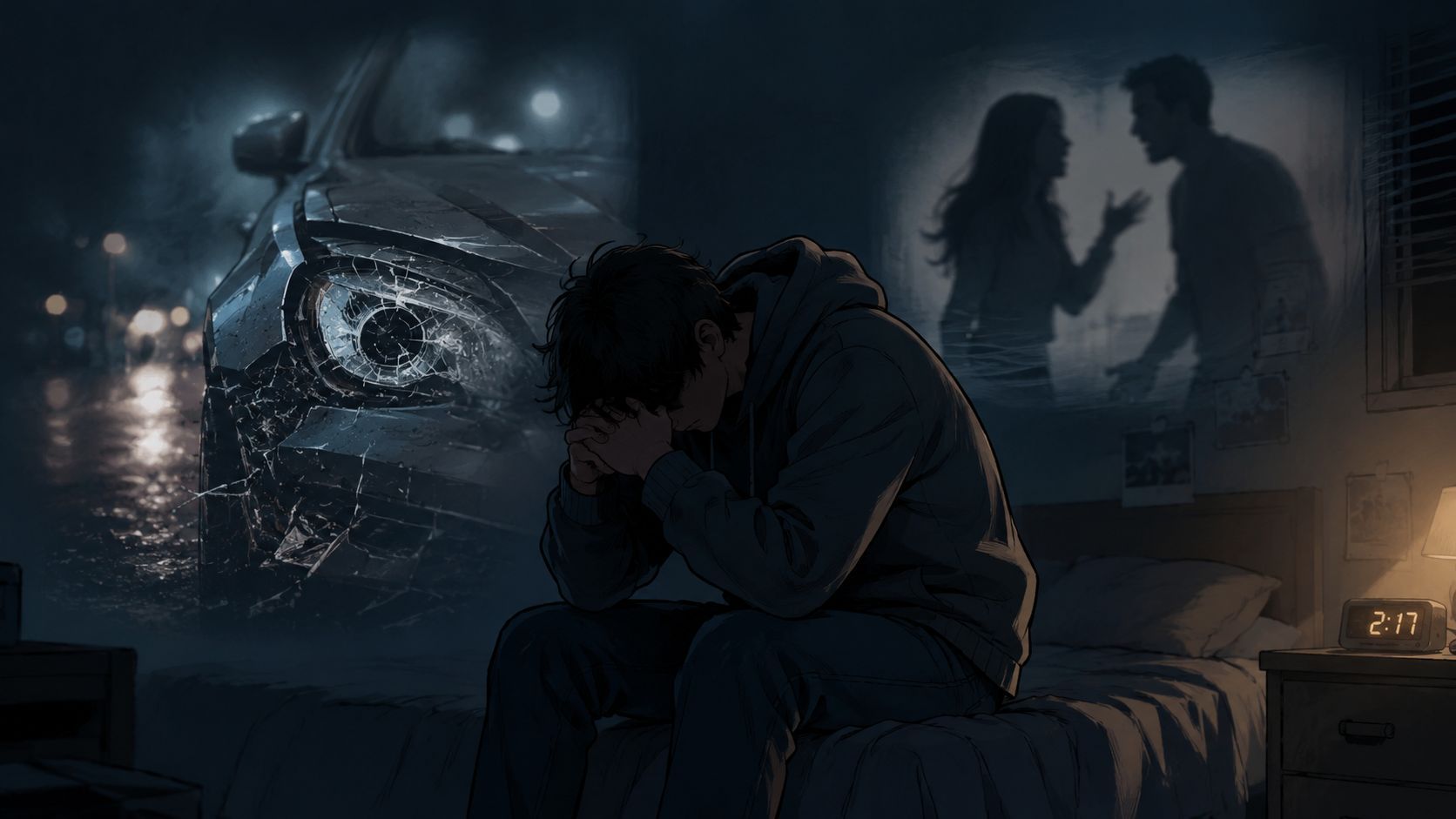
One phone call, one fight, one crash, one split-second bad decision. That's often how a manslaughter case starts.
When individuals search for manslaughter jail time, they're not doing casual research. They're sitting in shock. Maybe a detective wants a statement. Maybe a family member was just arrested. Maybe bond has been set and nobody in the room understands what the charge means. The panic is real, but panic also causes mistakes.
A manslaughter charge in Indiana is among the most serious criminal cases a person can face. It can lead to years in prison, a permanent felony record, and consequences that keep going long after the sentence ends. But it is not the same as a murder charge, and it is not a case where the outcome is automatic. Facts matter. Timing matters. The exact charge matters. In Indiana, the sentencing structure matters more than is generally recognized.
A Life-Altering Moment Understanding Your Manslaughter Charge
A normal day can turn into a felony case fast. A heated argument gets physical. Someone falls, hits their head, and dies. A reckless decision behind the wheel leads to a fatal collision. A fight that looked survivable at first becomes a death investigation by the end of the night.
That's when people start asking the wrong first question. They ask, “How much time am I looking at?” That question matters, but the better first question is, “What exactly am I charged with, and how will the state try to prove it?”
If the death happened in connection with driving, battery, or another reckless act, the state may look at several homicide-related offenses. In some cases, what happened may fit better under another charge, such as reckless homicide in Indiana, rather than manslaughter. That distinction can change everything about plea negotiations, defense strategy, and sentencing exposure.
What people get wrong in the first 24 hours
The first mistake is talking too much. People think they can explain away intent, panic, or confusion. They usually make the case worse.
The second mistake is assuming the police report tells the whole story. It doesn't. Early reports often miss witness context, prior threats, self-defense issues, intoxication questions, and medical causation problems.
Practical rule: If law enforcement wants your version of events, they're gathering evidence, not offering therapy.
What matters right away
The immediate focus should be narrow and disciplined:
- Stop giving statements: Don't try to “clear things up” without counsel present.
- Preserve evidence: Phones, text messages, surveillance footage, vehicle data, and witness names can matter.
- Identify the legal theory: The state has to choose a charge that fits the facts and can be proven.
- Understand the sentencing framework: In Indiana, the advisory sentence often gives you the actual starting point, not just the outer limits.
A manslaughter case feels chaotic at first. The legal system is still structured. Once you understand the charge, the sentencing range, and where the pressure points are, the case becomes something you can fight.
Voluntary vs Involuntary Manslaughter in Indiana
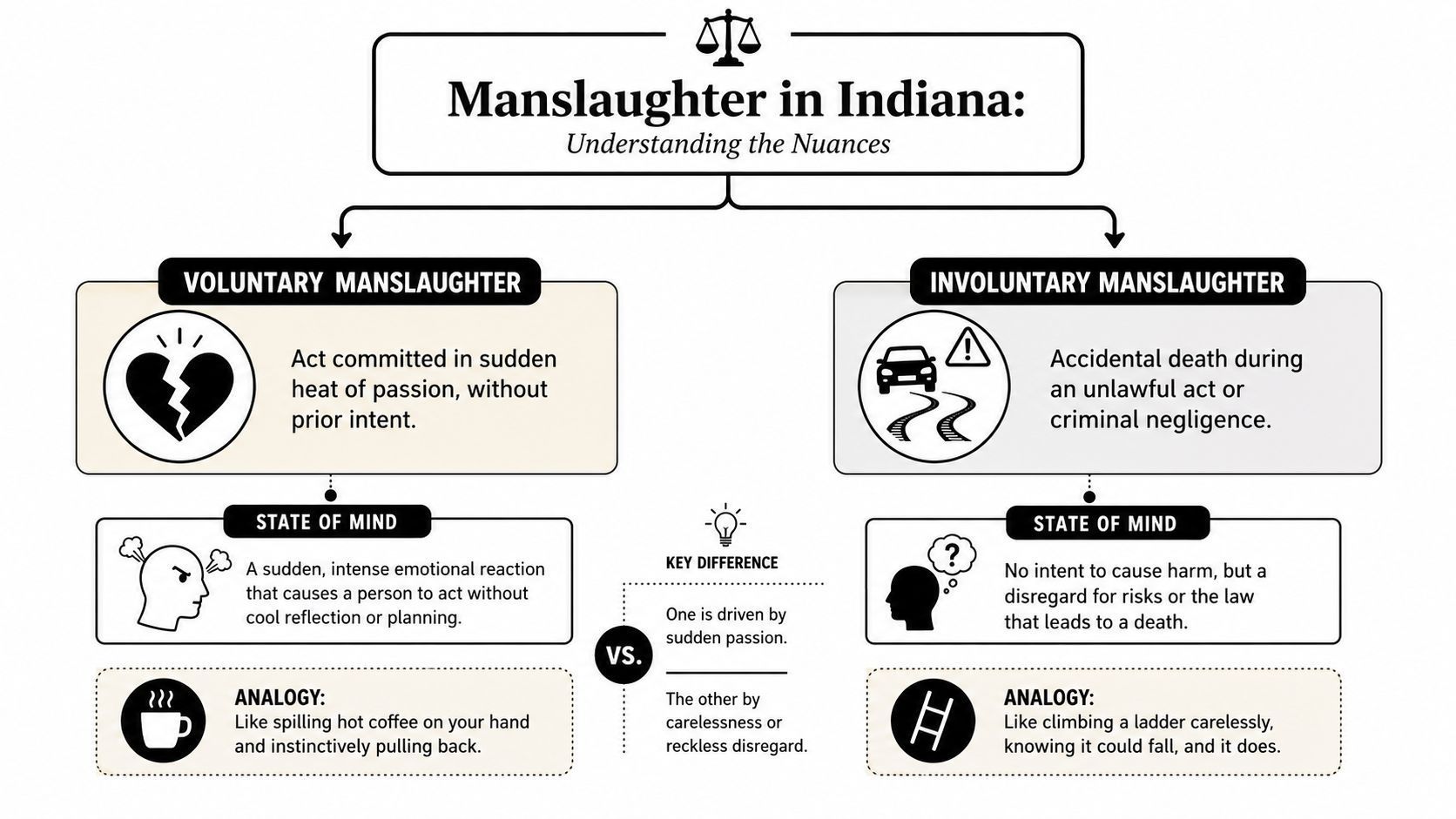
The word “manslaughter” sounds broad, but Indiana law treats voluntary manslaughter and involuntary manslaughter as very different acts.
At the core, the difference is the defendant's state of mind. Indiana draws that line sharply. Under Indiana Code on manslaughter offenses, voluntary manslaughter involves killing someone while acting under “sudden heat,” while involuntary manslaughter stems from a death that occurs while committing a battery or another underlying crime.
Voluntary manslaughter and sudden heat
Think of voluntary manslaughter as a pressure-cooker situation. The allegation is not that the person calmly planned a killing. The allegation is that the person intentionally killed, but did so while overwhelmed by sudden heat.
That phrase matters. “Sudden heat” is not just anger. It's a legal concept tied to immediate provocation and loss of self-control. In practice, lawyers spend a lot of time fighting over whether the facts really support that theory, or whether the state is overcharging.
Examples often involve:
- fights that escalate quickly
- domestic confrontations
- sudden physical altercations
- situations where words, threats, or conduct immediately precede the death
Involuntary manslaughter and an unlawful act
Involuntary manslaughter is different. A useful analogy is a blindfolded driver. The person may not want anyone dead, but they engage in conduct so unlawful and dangerous that someone dies as a result.
Indiana ties this offense to a death that happens while the accused is committing battery or another underlying crime. That means these cases often turn on a chain of events. The state has to show more than a tragic result. It has to connect the death to the criminal act.
The difference between these charges is not just semantics. It affects how prosecutors frame intent, how juries understand blame, and how judges approach sentencing.
Why the distinction matters in real cases
Two fatal incidents can look similar from the outside and still lead to very different charges.
A bar fight with evidence of direct intent, provocation, and a sudden emotional explosion may point toward voluntary manslaughter. A death caused during a battery, where the fatal result was not the intended outcome, may support involuntary manslaughter instead.
That's why manslaughter jail time can't be answered from the police headline alone. Before anyone can realistically assess exposure, the case has to be sorted into the right legal category. In Indiana, that sorting process drives everything that follows.
Indiana's Felony Levels and Sentencing Ranges
A client hears “one to six years” and locks onto the one. In an Indiana courtroom, that is often the wrong number to focus on.
Indiana felony sentencing works on three numbers: the minimum, the maximum, and the advisory sentence. For sentencing strategy, the advisory term usually matters most because it is the judge's baseline unless either side gives the court a solid reason to go lower or higher. That point gets missed in a lot of online articles, and it leads people to underestimate their real exposure.
For readers who need a broader primer on how this system works, Indiana felony categories are explained in this guide on understanding felony levels in Indiana.
The advisory sentence is the practical starting point
For involuntary manslaughter in Indiana, the charge is commonly treated as a Level 5 felony, and the practical reference point is the 3-year advisory sentence. The full statutory range runs from 1 to 6 years.
That distinction matters in real cases. A judge can impose a sentence anywhere in that range, but sentencing arguments usually start around the advisory number. If the defense wants less than the advisory term, counsel needs to present a factual and legal basis for it. If the prosecutor wants more, the state will try to build aggravating facts that justify pushing the sentence upward.
Indiana Manslaughter Sentencing at a Glance 2026
| Type of Manslaughter | Indiana Felony Level | Sentencing Range (Years) | Advisory Sentence (Years) |
|---|---|---|---|
| Voluntary Manslaughter | Level 2 Felony | Severe felony exposure under Indiana law | Advisory term depends on the charged level and case facts |
| Involuntary Manslaughter | Level 5 Felony | 1 to 6 | 3 |
The chart gives the framework. It does not tell you where a sentence will land.
That is where Indiana practice matters. In manslaughter cases, I do not evaluate exposure by quoting the outer range alone. I look at the charged felony level, the advisory sentence attached to that level, the likely aggravators, and whether the facts support a push for a lesser included offense or a different theory of the case. Those are the points that affect real sentencing outcomes in Indiana courts.
Why this structure changes the defense approach
A Level 5 felony with a 3-year advisory sentence changes how the case should be handled from the start. Waiting until the sentencing hearing to explain why a client deserves less time is usually a mistake. By then, the record may already be filled with damaging statements, bad assumptions, and unchecked aggravating facts.
A serious defense effort usually focuses on several fronts early:
- Attack the charge level: If the evidence supports a lower offense, the sentencing framework changes with it.
- Limit harmful admissions: Statements to police, witnesses, or family members can become aggravating evidence later.
- Build mitigation early: Judges give more weight to documented treatment, work history, mental health evidence, and acceptance of responsibility than to last-minute promises.
- Use sentencing reality in negotiations: Plea discussions are different when both sides know the advisory sentence is the actual starting point.
The hard truth is simple. In Indiana, the minimum sentence is rarely the safest planning assumption. For many defendants facing manslaughter-related exposure, the advisory sentence is the number that should frame every decision from the beginning.
Factors That Can Increase or Decrease Jail Time
Two defendants can face the same charge and walk into sentencing with very different risk. In Indiana, the judge starts with the advisory sentence for the felony level. From there, the case usually moves up or down based on the facts the state can prove and the mitigation the defense can document.
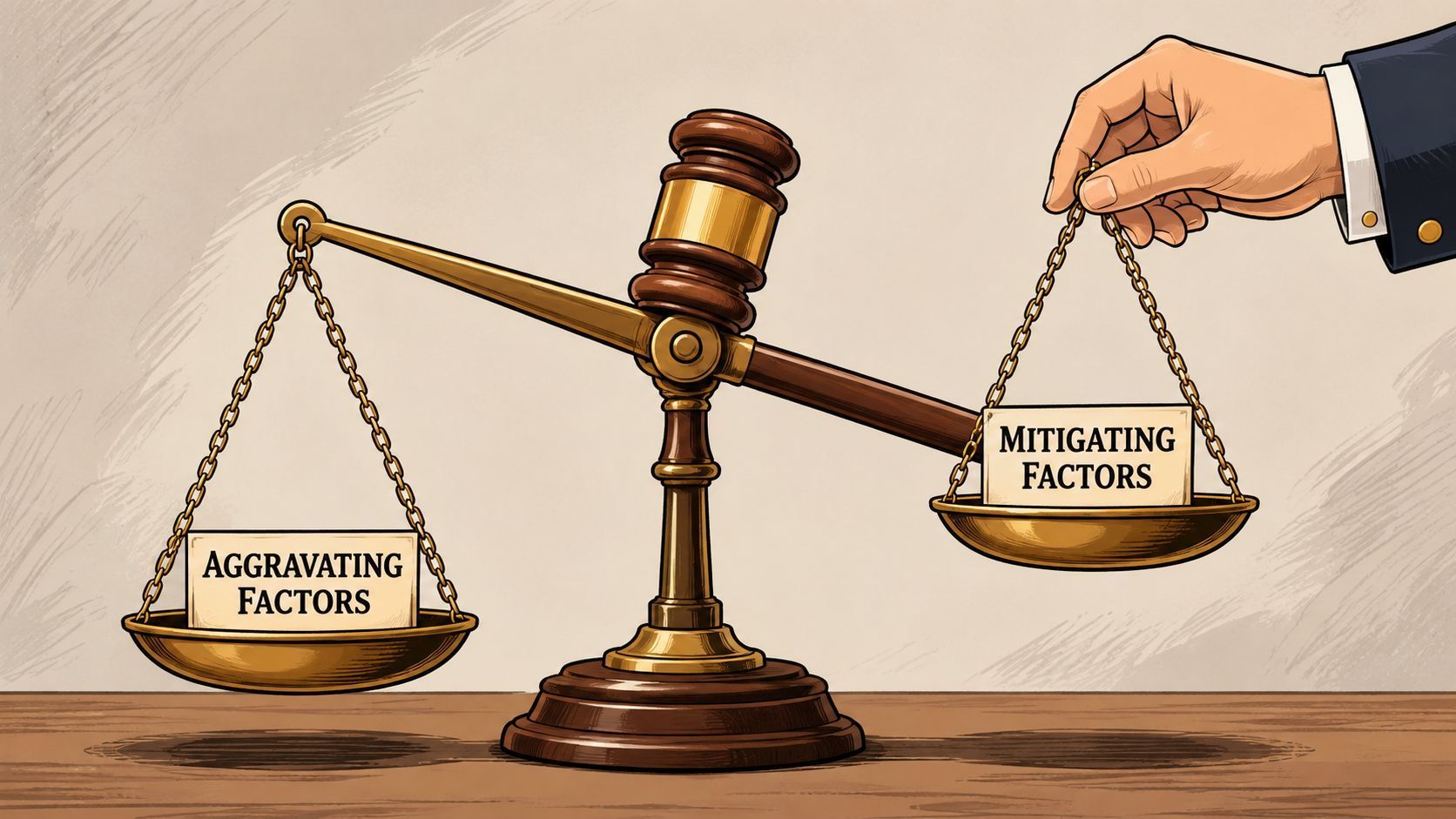
That is the practical reality many people miss. The statutory range matters, but the advisory sentence is the effective starting point in an Indiana courtroom. If the prosecutor presents strong aggravators and the defense shows up with little more than an apology, the sentence usually moves above that number. If the defense cuts down the harmful facts and builds mitigation early, the court has a reason to stay at the advisory term or go lower when the law allows.
What pushes a sentence higher
Judges look for facts showing the offense was more serious than a typical case at that felony level, or that the defendant poses a greater risk going forward.
Common aggravating factors include:
- Criminal history: Prior convictions, especially violent offenses, often give the state a strong argument for more time.
- Conduct after the death: Leaving the scene, giving false statements, pressuring witnesses, or hiding evidence can make a bad case worse.
- Particularly harmful facts: A vulnerable victim, children present, or extreme recklessness can affect how the court views the offense.
- Substance abuse history tied to the offense: In vehicle-related cases, prior impaired-driving conduct can heavily influence sentencing even before you get to formal enhancements.
- Poor performance on prior supervision: Probation violations and failed treatment attempts often hurt at sentencing.
A sentencing hearing is often a fight over which facts define the case. Prosecutors highlight danger, indifference, and prior mistakes. The defense needs a record that puts those points in context or undercuts them.
What can pull the sentence down
Indiana courts also consider mitigation. Under Indiana's mitigating-factor statute, the judge may weigh facts such as the victim inducing or facilitating the offense, along with the defendant's background and the circumstances of the event.
Useful mitigating points often include:
- Little or no criminal history
- Strong evidence of provocation or sudden circumstances
- Mental health or substance abuse issues that are documented and being treated
- Acceptance of responsibility
- Steady work history and family support
- Real cooperation through counsel
- Evidence that the defendant is a good candidate for probation, community corrections, or treatment
Mitigation has to be proved. Judges hear unsupported claims every day. Treatment records, employment records, evaluations, letters from credible people who know the defendant well, and a clean pretrial record carry more weight than vague promises to do better.
For many clients, another hard question is how much of the sentence will be served. Indiana credit time rules can affect that calculation, and this explanation of Indiana credit time law and how it affects actual time served is a useful starting point.
What actually changes outcomes
Sentencing is rarely won by a last-minute speech. It is usually shaped weeks or months earlier.
The best defense work on jail exposure starts before the sentencing hearing. That means correcting bad facts in the probable cause narrative, keeping the client from making damaging statements, getting treatment or evaluations started early, and giving the judge something concrete to rely on besides the prosecutor's version of events. In a manslaughter case, that preparation can be the difference between a sentence that stays near the advisory number and one that climbs well above it.
Hypothetical Scenarios of Manslaughter Charges
A single shove, one punch, or a bad decision behind the wheel can turn an ordinary day into a felony case with years of prison exposure. In Indiana, the first question is not just what happened. It is what level the state can prove, and where the judge is likely to start under the advisory sentence.
That advisory number matters. Clients often focus on the full statutory range, but judges usually begin with the advisory sentence and then move up or down based on the facts. In a manslaughter case, the fight is often over what facts the court accepts, because that can change the actual sentencing starting point by years.
A fight outside a bar
Two men argue inside a bar, take the dispute outside, and one throws a punch. The other falls, strikes his head on the pavement, and dies later.
That fact pattern often raises a voluntary manslaughter question if the state claims the act happened during sudden heat. It can also become a causation fight. The defense may argue self-defense, mutual combat, or that the death resulted from the fall and medical complications rather than an intentional act designed to kill.
The details that decide the case are usually concrete:
- who escalated the confrontation
- whether anyone tried to retreat
- what surveillance video shows
- whether witnesses are consistent
- what the medical examiner can say about the actual cause of death
Small facts change charging decisions. A witness who says the accused backed away first, or a video showing the other person lunged first, can change how a prosecutor values the case and how a judge views blame.
A battery that ends in death
A person shoves another during an argument at home. The shove is intentional. The death is not. The victim falls, suffers a fatal injury, and dies.
That is the kind of case prosecutors often charge as involuntary manslaughter because the death allegedly occurred during the commission of battery. From a defense standpoint, these cases are rarely as simple as the probable cause affidavit makes them sound. The issue may be whether the shove happened at all, whether the force was criminal, whether another medical condition caused the death, or whether the state's witnesses are filling in gaps after the fact.
I often see defendants hurt their own case here by trying to sound reasonable. Saying, "I only pushed him," may feel like minimizing. In court, it can function as an admission to the underlying offense.
A fatal vehicle case with prior OWI history
A driver with a prior OWI conviction is involved in a fatal crash. The state alleges unlawful driving caused the death and files the case at a higher felony level because of the prior record.
As noted earlier, Indiana law can increase exposure in vehicle-based homicide cases when there is a qualifying OWI history. In practice, that means the advisory sentence may start from a much harsher place than defendants expect. That is the part generic sentencing articles often miss. The statutory range matters, but the advisory sentence is usually the primary center of gravity in plea talks and at sentencing.
The defense usually has to work several issues at once:
- whether the prior conviction legally qualifies
- whether intoxication or another unlawful act caused the death
- whether crash reconstruction supports the state's theory
- whether road, weather, vehicle, or third-party factors played a role
- whether early mitigation can limit the damage if the evidence is strong
These examples show the practical reality. Two cases may both be called manslaughter, but they do not carry the same sentencing risk, the same advisory starting point, or the same defense strategy. No honest lawyer should promise a jail-time number after reading only the arrest report.
Fighting the Charges Plea Bargains and Legal Options
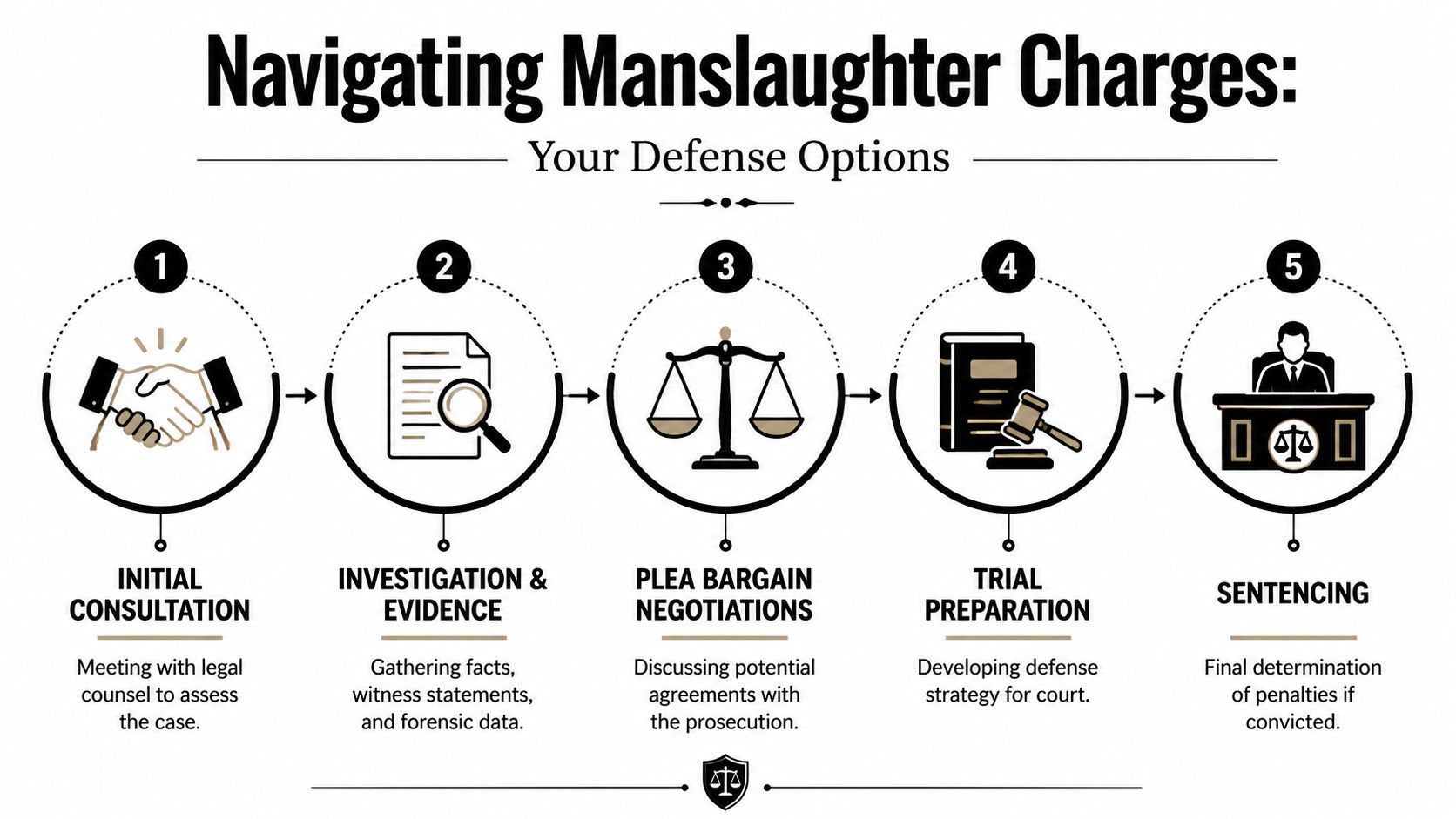
Most manslaughter cases don't end with a dramatic trial verdict. They're usually fought through investigation, motions, strategic advantage, and negotiation. That doesn't mean the defense is weak. It means smart defense work often happens long before a jury is seated.
What a plea bargain really does
A plea bargain is not just “taking a deal.” In a serious felony case, it is often a targeted effort to reduce risk.
That can mean:
- reducing the charge to a less serious felony
- dismissing enhancements
- capping executed time
- shaping the sentencing recommendation
- preserving arguments for a lower sentence
A prosecutor negotiates differently when the defense has identified proof problems. Weak witness testimony, shaky causation, admissibility issues, and factual disputes all create bargaining power.
Other pressure points in the case
A strong defense looks beyond the charging language. It asks where the state's case can be limited or excluded.
That may involve:
- Motions to suppress: If law enforcement obtained statements or evidence improperly, the court may exclude them.
- Independent investigation: Defense interviews often uncover facts omitted from the initial report.
- Expert review: Medical and forensic issues can alter causation arguments.
- Sentencing advocacy: Even after a plea or conviction, the defense can still shape the outcome.
Case strategy matters most when the evidence looks bad. That's when legal precision can turn a catastrophic result into a survivable one.
Trial is one option, not the only option
Some cases should go to trial. Others should be negotiated hard. Others call for a two-track strategy where the defense prepares for trial while pushing for a resolution that avoids the worst sentencing exposure.
The right path depends on the quality of the evidence, the credibility of the witnesses, the legal fit of the charge, and the sentencing risks if the defendant loses at trial. The mistake is treating every manslaughter case the same. They aren't.
What to Do Now If You Are Charged in Indiana
If you're facing a manslaughter charge in Indiana, don't guess your way through it. Don't rely on generic internet summaries. And do not speak with police or investigators without a lawyer present.
The biggest practical takeaway is simple. Manslaughter jail time in Indiana is shaped by the exact charge, the felony level, and the advisory sentencing structure. For involuntary manslaughter, the advisory sentence is a realistic benchmark, not just background information. In vehicle cases or cases with prior history, the stakes can rise fast.
Take these steps now:
- Stay silent with law enforcement
- Do not contact witnesses to “fix” the story
- Preserve your phone, messages, and any video
- Get legal counsel involved immediately
- Treat the first court dates seriously
The first days of a homicide case often determine how much room the defense has later. Delay helps the prosecution. Early action protects you.
If you or someone close to you has been charged, contact the Law Office of Mark Nicholson for a confidential consultation. Indiana manslaughter cases demand immediate, informed action. The sooner you get experienced defense counsel involved, the better your chances of protecting your freedom, your record, and your future.