
How to Post Bail in Indiana
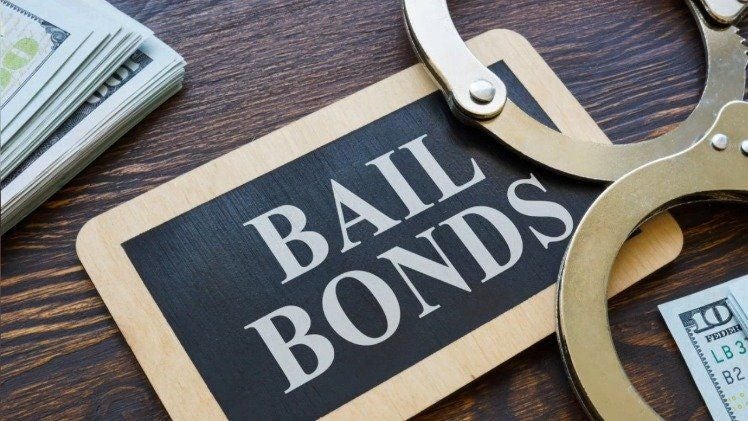
In Marion County, Indianapolis, Indiana, it may take anywhere from 8-24 hours for the jail to release someone after they paid bail. Several years ago, the wait was even longer. If the police arrest someone for a domestic violence case, they may be held for at, minimum, 8 hours. Please see below.
§ 35-33-1-1.7. Mandatory hold on person arrested for domestic violence
|
(a) |
A facility having custody of a person arrested for a crime of domestic violence (as described in IC 35-31.5-2-78 ) shall keep the person in custody for at least eight (8) hours from the time of the arrest. |
|
(b) |
A person described in subsection (a) may not be released on bail until at least eight (8) hours from the time of the person's arrest. |
Also, if police arrest someone for drunk driving, they may be held to make sure they are no longer impaired before they are released.
If the person doesn't have a phone, the person may be allowed to make a phone call to let family, friends, or relatives know they were released.
7 Different Ways to Get Out of Jail and Post Bond/Bail
- Own Recognizance – This involves a person signing a contract and agreeing to return for all court appearances. No bail and no security is required. Own Recognizance is commonly used for non-violent misdemeanor crimes. An OR (Own Recognizance), or ROR (Released on Own Recognizance), is also more common in counties where jail overcrowding is an issue, like Marion County. Although more counties are moving towards pre-trial release programs.
- Cash Bond- A cash bond is a bond a person pays using the total amount of cash. Any person can post this type of bond. Once the person resolves the case, a cash bond can be refunded if there are no fees, fines, or restitution owed.
Example: Judge orders a $500 cash bond, requiring a person to pay the full $500 to the court to post bail for another party.
- Surety Bond – Surety bonds are 10% of the total bond ordered in a case and e posted with a licensed bail agent. The bail agent then posts bail with the court on your behalf. This type of bond is not refundable.
Example: Judge orders a $1000 surety bond. A person would give 10% or $100 to a licensed bond agent. The bond agent then posts bail with the court on your behalf.
- XC Bond – An XC bond is a combination of a cash and a surety bond. Once the person resolves the case, the bond is refundable if there are no fines, fees, or restitution owed.
Example: Judge orders an XC bond, where $500 is a cash bond, and $1000 is a surety bond. Any person can post the $500 cash bond, which they must pay in full. A licensed bond agent must post 10% of the surety bond, or $100.
- Percent Bond – Similar to a surety bond, a percent bond requires a person to pay 10% of the total bond amount. However, a licensed bond agent is not required to post the bond – any person can do it. A percent bond also called a PR bond, is refundable if there are no fees, fines and or restitution ordered once the person resolves the case.
Example: Judge orders a $1000 percent bond. Any person, not necessarily a bondsman, can post 10% of the bond amount or $100.
- XR Bond – An XR bond is a combination of a surety and a percent bond. Only the percent bond portion of an XR bond is refundable if there are no fines, fees, or restitution owed to any party once the person resolves the case.
Example: Judge orders an XR bond, where $1000 is a surety bond, and $500 is a percent bond. A licensed bond agent must post 10% of the surety bond amount, or $100. Any person, not necessarily a bond agent, must post 10% of the percent bond, or $50.
- Property bond – If the bail amount is high, then Property bonds may be used. The person, or a co-signor, has a lien placed on their property – such as a home or car. The court will record a lien in the county where the property is located. There is considerable paperwork required to prove the value of the property and ownership by the person or co-signor. Property bonds are rare.

Attorney Mark Nicholson with his client and paralegal
How do I get bail?
- How to Get Bail
In Indiana, most counties have a bail schedule. Recently the Indiana Supreme Court had a commission study bail release. They suggested counties use the Indiana Risk Assessment System. Once they process the person into jail, it's possible to post bail through a sheriff or clerk's office before attending an initial hearing. If the person doesn't have enough cash to pay for bail, he or she can call a bond agent or family or friend from jail for help. Also, an attorney can request a bond hearing. The attorney can ask the court to establish a bond, lower the bond, or remove the bond entirely.
- 2 . What Will Bail Cost
The only cost for a cash bond is the court fees and administrative costs that are subtracted from the amount of cash posted before they return it to the person arrested or a co-signor. For a surety bond, bond agents are allowed to charge only a 10 percent premium under Indiana law. If the court set bail $50,000, for example, the premium paid to a bail bond agent is $5,000. In some cases, the bail bond agent will also request collateral from a person. If the person shows up for all court appearances, then the collateral is returned.
- What happens if I Fail to Appear for Court
There are both monetary and criminal consequences of not showing up in court while out on bail. If a person or co-signor posted a cash bond, the entire amount of forfeited to the court. If a person hires a bond agent, the court demands the whole bail amount from the agent who usually hires a bounty hunter to locate and bring the person back to jail. The bond agent has up to 1 year to prove there was a legitimate reason that the person failed to appear in court and recover the 90 percent of the bail paid to court officials. In a criminal case, a warrant for the separate crime of failure to appear will be issued by the court. The court can also issue a warrant for the offense that initiated the case; in other words, revoke bond.
If you need help with a bond hearing or after being released from jail, contact the Law Office of Mark Nicholson. We are an experienced law firm in helping clients get out of jail on pre-trial release.
The post How to Post Bail in Indiana appeared first on Law Office of Mark Nicholson.


Comments
There are no comments for this post. Be the first and Add your Comment below.
Leave a Comment