
8 Cross Exam Techniques
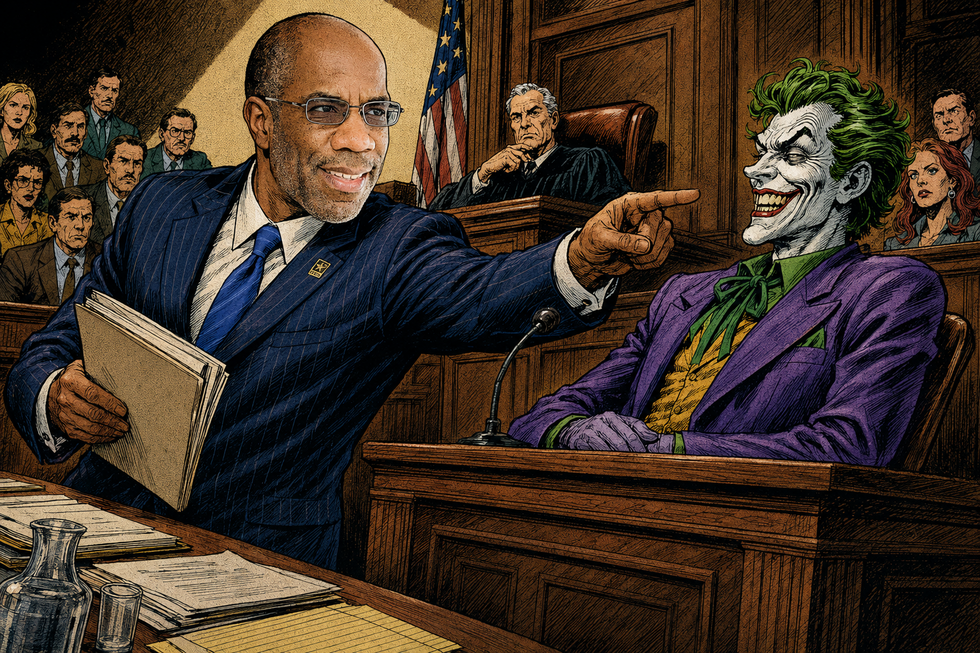
You're watching a witness give testimony that sounds confident, specific, and damaging to your case. The instinct to argue with every answer is understandable, but effective cross-examination isn't a debate with the witness. It's a disciplined method for securing admissions, exposing limits in perception, preserving contradictions, or showing why the opposing side hasn't proved an essential fact.
A criminal defense lawyer may use cross-examination to develop reasonable doubt about an officer's observations, a victim's identification, or the reliability of an investigation. In civil litigation, the same process may test causation, damages, medical opinions, or an expert's assumptions. The attorney may not need one witness to establish every favorable fact. Often, the better result is a small group of clear answers that the jury can use when evaluating the entire record.
The strongest examinations begin before trial, with reports, recordings, photographs, medical records, prior statements, and applicable evidence rules. They also distinguish firm control from intimidation. A witness may need to answer the question asked, but harassment can distract the jury and invite judicial intervention.
That preparation is the kind of trial-focused work an Indiana firm such as the Law Office of Mark Nicholson uses when helping clients understand questioning, evidence, and courtroom strategy. The following cross examination techniques organize the live decisions counsel makes, from controlling the answer to exposing contradictions.
1. The Leading Question Technique
A leading question contains the fact you want the witness to confirm. Instead of asking a witness to tell the story, you present a narrow proposition and ask whether it's accurate. That structure makes leading questions the basic working tool of cross-examination.
The technique is especially useful when challenging a prosecution narrative. In a DUI case, counsel might ask, “Officer, you didn't administer the horizontal gaze nystagmus test according to the applicable procedure, correct?” In a battery case, the question may be, “You didn't see the defendant strike the alleged victim, did you?” In a civil rights case, counsel could ask, “You didn't have a warrant before entering the residence, correct?”
Each question should do one job. A compound question gives the witness an opportunity to accept one proposition while disputing another. A question built on an assumption the evidence doesn't support can also backfire.
Build the answer before you ask for it
Before using a leading question, identify the report, recording, photograph, or other evidence that supports the expected answer. The best questions usually rest on facts already established, rather than on counsel's belief about what happened.
Use a sequence such as:
- One fact at a time: Separate the officer's distance, lighting conditions, and observation time.
- Known answers: Don't ask a question solely because the answer would help. Ask when the record gives you a reasonable basis to expect it.
- Strategic pauses: After a favorable answer, pause. The jury needs a moment to register the admission.
- Closing preparation: Mark useful answers as they occur so closing argument can refer to the testimony accurately.
Practical rule: A leading question should usually be a statement with a question mark, not an invitation for the witness to tell the story again.
A client may experience this technique as restrained and somewhat repetitive. That's intentional. Counsel isn't trying to make the witness confess to the entire case. Counsel is building a record of specific facts the judge or jury can evaluate.
2. The Impeachment Technique
Impeachment tests credibility by placing a witness's current testimony beside a prior statement, document, recording, or physical fact. A contradiction matters only when the jury can understand what the witness said before, what the witness said now, and why the difference matters.
Suppose an officer says a defendant appeared unsteady during a DUI investigation, while dashboard video shows the defendant walking steadily during the relevant test. In a battery case, a witness may claim to have seen the incident, while messages sent shortly afterward indicate the witness said they didn't see what happened. In a civil rights case, an officer's denial of excessive force may be difficult to reconcile with photographs and medical records documenting injuries.
The attorney's tone matters. Impeachment isn't strongest when counsel accuses the witness of lying. It's strongest when counsel establishes the inconsistency and allows the jury to draw the conclusion.
Use a document in the right order
A reliable sequence begins by securing the present testimony. Counsel then establishes the prior statement, confirms the circumstances in which it was made, and directs the witness to the precise language or image. The witness may deny, minimize, or explain the inconsistency. That doesn't always ruin the impeachment. The contradiction may still be clear to the fact-finder.
In Indiana litigation, the admissibility and use of the material must be considered before the confrontation. The Indiana rules of evidence trial guide provides useful context for the evidentiary foundation that can affect whether a prior statement, recording, or document reaches the jury.
Counsel should obtain prior reports, interviews, depositions, text messages, social media material, body-camera footage, and dashboard-camera footage where relevant. The lawyer also needs to preserve the exact exchange for the record. An unclear impeachment moment can lose force on appeal or in closing argument.
The client may hear a calm series of questions rather than a dramatic confrontation. That's usually a sign of discipline. A lawyer who has the evidence ready doesn't need to bully the witness. The contradiction should do the work.
3. The Control and Confinement Technique
Witnesses often answer a narrow question with a broad explanation. Sometimes the explanation helps your case. Sometimes it supplies the missing context that rescues damaging testimony. The control and confinement technique keeps the examination focused on the precise subject counsel has chosen.
The lawyer sets expectations early, commonly through short questions that call for a yes-or-no response. If a witness begins explaining field-sobriety procedures instead of answering whether a test was performed properly, counsel might say, “Please answer the question asked. Did you administer the test according to the procedure?” In a battery case, counsel may return to, “Did you see the defendant strike the alleged victim?” In a warrantless-entry case, the lawyer may ask whether written authorization existed and seek a direct answer.
Control without intimidation
The difference between control and aggression is important. “Please answer yes or no” is generally more effective than a hostile command. Counsel should also recognize when an explanation is strategically useful. A witness who adds a damaging qualification may give the lawyer a better point than a bare “yes” or “no.”
Useful habits include:
- Set the format early: Establish short answers before the witness develops a narrative rhythm.
- Stay consistent: Don't demand confinement only when an answer hurts.
- Use the judge appropriately: If a witness repeatedly refuses to answer, counsel can request an instruction from the court.
- Practice before trial: Depositions and mock examinations reveal whether the questions are narrow enough.
Trial advocacy training, including the work discussed through the Indiana Public Defender Council's Trial Practice Institute, reinforces that courtroom control depends on preparation, phrasing, and judgment, not volume.
A client may see counsel permit one explanation and stop another. That isn't inconsistency. It's decision-making. The lawyer is weighing whether the answer advances the examination, creates an objection, or gives the witness an opportunity to repair the opposing side's case.
4. The Credibility Assessment Technique
A witness can be sincere and still be wrong. Credibility assessment examines the conditions under which the witness perceived, remembered, and reported the event before counsel directly attacks honesty.
In a DUI case, counsel might ask how far the officer was from the vehicle, how bright the lighting was, whether high beams were in use, and how long the officer observed the alleged swerving. In a battery case, the examination may address the bar's lighting, the number of people present, obstructions, distance, and the brief duration of the confrontation. A bystander in a civil rights case may have watched from a distance while officers stood between the bystander and the person involved.
Turn the scene into evidence
The physical setting often supplies the strongest questions. Diagrams, photographs, traffic patterns, weather information, lighting conditions, and video can help translate an abstract limitation into something the jury can understand.
Counsel should ask the witness to identify the viewing position, estimate distance, describe obstructions, and acknowledge what the witness couldn't see. If an officer observed driving from a moving patrol vehicle, that movement may affect the opportunity to make a precise observation. In a personal-injury case, the lawyer may explore speed estimates, road conditions, corrective lenses, reaction time, and the duration of the observation.
The examination should begin with the witness's own limitations. A witness who admits poor lighting or a partially blocked view has supplied a more credible basis for doubt than a witness who is merely called dishonest.
Cross-examination has persuasive power, but persuasion and truth detection aren't the same thing. Research involving child witnesses found that cross-examination reduced credibility ratings from 4.21 to 3.82 on a 5-point scale, while recall accuracy also declined compared with direct examination. The mock-juror research illustrates why counsel should avoid treating confidence or emotional impact as a substitute for reliable observation.
Clients should expect counsel to investigate the scene rather than rely solely on a witness's confident description. The purpose is to show the jury what the witness could perceive, not to punish the witness for having limitations.
5. The Foundation and Lock-In Technique
A contradiction has more force after the witness has committed to the factual foundation. The foundation and lock-in technique moves in a logical sequence, securing specific admissions before presenting the photograph, recording, report, policy, or other evidence that creates the conflict.
Consider a DUI examination involving an eye-movement test. Counsel may establish that the officer administered the test, documented the clues, and wrote a particular number in the report. Only after those points are fixed does counsel introduce video showing a different sequence or count. In a battery case, counsel may establish the witness's distance, lighting, position, and observation time before showing that the view was obstructed.
Make the sequence unavoidable
Write the question sequence before trial. Begin with the witness's role, then move to the event, the source of the witness's knowledge, the precise observation, and the record created afterward. Use the witness's terminology where possible. Specific language makes it harder for the witness to retreat into general uncertainty.
A useful progression might look like this:
- Role: You administered the test.
- Record: You documented the result.
- Specific admission: Your report records the number of clues.
- Conflict: The recording shows the test being conducted differently.
Pause after each important admission. The jury should hear the foundation as a series of established facts, not as a rushed prelude to the exhibit.
The technique also has ethical limits. Counsel shouldn't pretend that an approximate answer is exact or characterize a disputed policy as settled law. The attorney must lay the foundation fairly and give the witness a genuine opportunity to clarify when the evidence requires clarification.
For the client, lock-in questions can look uneventful until the evidence appears. That's normal. Trial examinations often gain force through accumulation, with the meaning of an earlier answer becoming clear only after the next piece of evidence is introduced.
6. The Concession and Small Agreements Technique
A witness who agrees on ordinary facts may become more willing to engage with disputed facts. The concession technique begins with points that are difficult to contest, then moves inward toward the issue that matters.
An officer may agree that dispatch provided information, that the officer arrived at a particular location, and that a standard procedure was expected. The examination can then address whether each step was followed. A witness in a battery case may agree about the date, location, and presence of other people before counsel narrows the focus to distance and visibility.
Build concentric circles
The opening agreements shouldn't be tricks. They should be accurate and relevant. A witness who believes counsel is distorting simple facts may resist the entire examination, while a witness who sees a fair progression may continue answering directly.
The lawyer can organize the questions in widening circles:
- Neutral facts: Establish time, place, role, and basic circumstances.
- Shared standards: Confirm what procedure, attention, or conduct would ordinarily require.
- Case-specific facts: Ask what the witness did, saw, or recorded.
- Critical issue: Test the conclusion that supports the opposing party.
The first disagreement can be useful. Counsel shouldn't react theatrically, but a calm transition such as “I understand, so you disagree with that point” makes the change visible. The witness may remain credible overall while being mistaken about the critical fact. That distinction can be more persuasive than an attempt to portray the witness as dishonest in every respect.
This approach also protects the client from an unnecessary all-or-nothing strategy. The goal isn't to attack every part of a witness's account. It may be enough to show that the witness is reliable about the setting but not about the identification, timing, force used, or cause of an injury.
7. The Assumed Facts and Gentle Contradiction Technique
A lawyer sometimes places a favorable fact inside a question and lets the witness decide whether to accept or reject it. The technique can expose the core dispute without announcing the desired conclusion too aggressively.
For example, counsel might ask an officer, “You hadn't received recent training on administering that test, correct?” In a battery case, counsel could ask, “When you arrived, the defendant was already standing apart from the alleged victim, wasn't he?” In a civil rights case, the question may assume that force was chosen before communication was attempted.
The witness may confirm the assumption, correct it, or deny it. Each response can help refine the record. A correction gives counsel the witness's exact position. That position may later conflict with a report, recording, policy, or another witness.
Use the technique without creating a trap
The tone should remain curious and controlled. Counsel can respond to a denial with, “I understand. You say communication occurred first,” then test when, how, and where that communication happened. The lawyer has preserved the witness's denial without arguing about it in front of the jury.
Assumed facts should have a reasonable evidentiary basis. Counsel shouldn't embed several unsupported propositions in one question or use the format to mislead the witness. A question that sounds clever but lacks foundation may draw an objection and damage counsel's credibility.
The technique works best as part of a sequence. Several modest assumptions can reveal whether the witness accepts a favorable description of the scene, timing, or conduct. If the witness denies each one, the jury still hears the opposing account in precise terms.
Clients may worry that gentle questioning seems too soft. In practice, the approach can reduce defensiveness and produce cleaner admissions. It also helps counsel distinguish a witness who is correcting an imprecise question from one who is resisting a well-supported fact.
8. The Narrative Constraint and Question Specificity Technique
“Tell us what happened” gives the witness control. Specific questions take that control back by breaking an event into individual facts.
In a DUI case, counsel might ask whether the vehicle crossed the center line, how many times, over what distance, and at what location. In a battery case, the lawyer can ask whether the witness saw a strike, what part of the body was used, and where contact allegedly occurred. A civil rights examination may ask separately whether an officer had a warrant, whether the person consented, and whether an emergency existed.
Replace broad prompts with precise units
A strong question usually contains one factual proposition. Avoid piling together several actions with “and” or “or.” Ask about measurements, times, locations, distances, and sequence when those details matter.
When a witness starts narrating, counsel can politely redirect: “Please answer the question I asked.” The lawyer should also know when to allow context. A helpful qualification may expose an exception or limitation that supports the client. Confinement is a tool, not a reflex.
The structure is particularly important in depositions, where a witness's answer can shape later trial strategy. The deposition guide for clients explains why careful preparation and precise testimony matter before trial.
A research study involving 60 mock witnesses found that negative and double-negative questions sometimes reduced response accuracy, while leading and leading-with-feedback questions didn't impair, and sometimes improved, accuracy. The eyewitness questioning research also reported that familiarizing witnesses with the process increased correct responses and reduced errors. The practical lesson is straightforward. Complex syntax can create confusion, so counsel should test whether the witness understands the question before using pressure to expose an inconsistency.
Clients should expect the lawyer to assemble the final narrative from reliable answers, not ask the witness to deliver the lawyer's theory. That method may feel slower, but it gives the jury concrete facts instead of an argument disguised as a question.
Cross-Examination: 8-Technique Comparison
| Technique | 🔄 Complexity | ⚡ Resources | ⭐ Expected outcomes | 📊 Ideal use cases | 💡 Key tips |
|---|---|---|---|---|---|
|
The Leading Question Technique |
Moderate, requires precise phrasing and objection avoidance |
Low, attorney skill, knowledge of facts |
High, narrows answers and controls testimony |
Cross-examination of hostile witnesses; DUI; establishing discrete facts |
Ask only known answers; keep questions single‑issue; pause after answers |
|
The Impeachment Technique |
High, extensive prep, foundation, and timing |
Moderate–High, prior statements, documents, video, review |
Very high when contradictions are clear, undermines credibility |
Contradicting police, victims, or written reports; DUI with dashcam |
Obtain prior statements; establish foundation then confront; preserve record |
|
The Control and Confinement Technique |
Moderate–High, assertive courtroom management required |
Low–Moderate, demeanor, judge cooperation, practice |
High, prevents narratives and creates a sharp record |
Cross of officers, hostile witnesses, testimony prone to speeches |
Set yes/no expectation early; use polite firmness; know when to allow explanation |
|
The Credibility Assessment Technique |
Moderate, requires scene analysis and focused questioning |
Moderate, diagrams, photos, environmental data, possible expert input |
High (subtle), raises doubt about perception rather than honesty |
Eyewitness ID issues; DUI night observations; perception‑dependent testimony |
Map sightlines; use photos/video; ask about distance, lighting, attention |
|
Foundation and Lock-In Technique |
High, detailed sequencing and logical scaffolding needed |
Moderate, careful scripting, documents, timeline, exhibits |
Very high if successful, creates inescapable admissions for impeachment |
Impeaching trained witnesses (officers); DUI procedure challenges; personal injury |
Script question sequence; secure specific admissions; present contradiction promptly |
|
Concession and Small Agreements Technique |
Moderate, psychological sequencing and patience |
Low, time and planned question sets |
High (when rapport maintained), builds agreement momentum |
Sympathetic witnesses; alleged victims; situations favoring rapport |
Start with genuinely easy agreements; don't telegraph strategy; transition smoothly |
|
Assumed Facts and Gentle Contradiction Technique |
Moderate, careful, non‑accusatory phrasing needed |
Low–Moderate, mastery of case facts to assume plausibly |
Moderate–High, subtly shifts burden and can elicit memorable denials |
Ambiguous facts; challenging officer justification or training claims |
Phrase assumptions gently; bundle favorable assumptions; use denials in closing |
|
Narrative Constraint and Question Specificity Technique |
Moderate–High, meticulous one‑fact‑per‑question drafting |
Low–Moderate, prep and disciplined courtroom control |
High, forces precise answers and makes omissions visible |
Any cross‑examination needing tight control; police testimony; personal injury |
Pre‑draft single‑issue questions; interrupt narratives; ask for specific measures |
Turning Cross-Examination Strategy Into Client Preparation
Effective cross-examination starts with a decision about the witness, not with a stock list of questions. Counsel should identify whether the witness is an eyewitness, investigating officer, opposing party, treating provider, retained expert, or another participant whose testimony carries a different kind of risk.
The next decision is the result worth pursuing. It may be an admission that the witness didn't see the essential act, a limitation on the officer's procedure, a contradiction with a recording, or a concession that an expert relied on incomplete facts. A lawyer who can't state the objective in plain language is likely to ask unnecessary questions.
Preparation should then connect the objective to admissible evidence. Counsel reviews reports, prior statements, recordings, photographs, medical records, diagrams, policies, physical exhibits, and deposition testimony. The lawyer builds the foundation, anticipates objections, considers likely explanations, and decides whether the witness should be confronted immediately or saved for closing argument.
Not every helpful answer requires control. A witness may volunteer a qualification that supports the defense or reveals a gap in the opposing case. The lawyer must recognize when to permit the explanation, when to return to a narrow question, and when to stop. Cross-examination often becomes weaker when counsel has already achieved the point but keeps asking.
The distinction between ordinary witnesses and experts also matters. Guidance from the National Institute of Justice's discussion of cross-examination emphasizes targeted challenges to an expert's field, qualifications, factual basis, bias, and prior writings. An expert examination may focus less on catching a simple contradiction and more on whether the methodology, assumptions, or scope of the opinion can support the conclusion.
Clients should expect counsel to review the evidence with them, explain likely questions, identify areas that may be misunderstood, and prepare them for the difference between direct testimony and cross-examination. That preparation isn't a promise about the result. It's a way to reduce surprises and help counsel make accurate decisions in the courtroom.
The legal limits remain important. Cross-examination depends on admissibility, jurisdiction, the scope of direct examination, judicial control, privilege, and the evidence admitted in the case. A technique that's appropriate in one proceeding may be limited or unavailable in another. Readers facing criminal charges, personal-injury claims, or civil rights litigation should obtain individualized legal advice rather than rely on a general article.
For Indiana clients, the Law Office of Mark Nicholson handles criminal defense, personal injury, and civil rights matters, with case preparation focused on the evidence, witness testimony, and strategy specific to the dispute. A consultation can help clarify what cross-examination may address, what records counsel needs, and how the next courtroom decision fits into the larger case.
If you're facing an Indiana criminal charge, injury claim, or civil rights dispute, the Law Office of Mark Nicholson can review the testimony, reports, recordings, and other evidence relevant to your case. Contact the firm to discuss a case-specific strategy for witness credibility, cross-examination, and trial preparation.


Comments
There are no comments for this post. Be the first and Add your Comment below.
Leave a Comment