
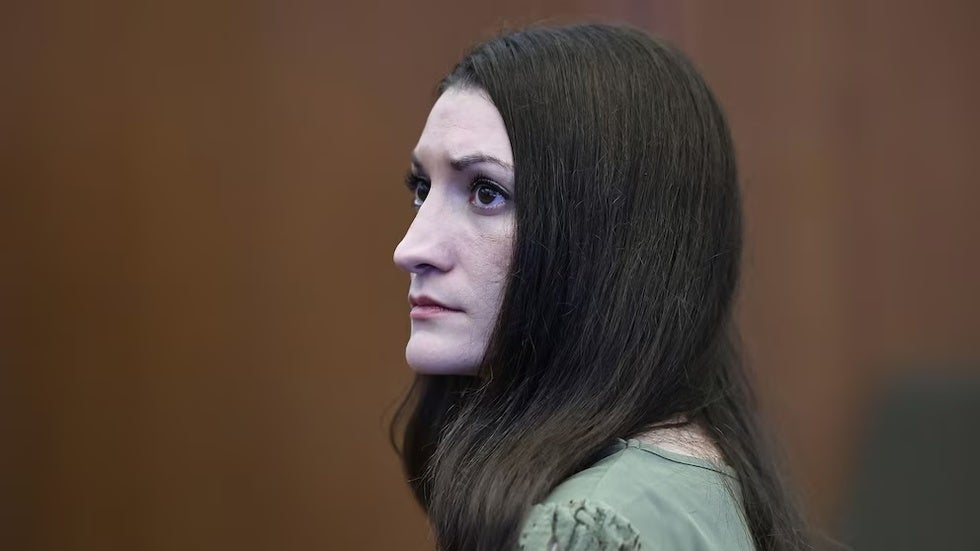
On September 4, 2026, Judge William Sullivan declared a mistrial in the Lindsay Clancy murder case after the jury deadlocked following seven days of deliberations.
The Massachusetts trial lasted five weeks. At its center was a question that does not become easier simply because the allegations are horrifying: Was Clancy criminally responsible for the 2023 strangulation deaths of her three children, or was she suffering from postpartum psychosis and a severe mental illness that destroyed her ability to understand the wrongfulness of what she was doing?
The jury could not reach a unanimous answer.
That is not a technicality. That is the criminal justice system doing exactly what it is supposed to do when reasonable doubt remains.
Now the Commonwealth may seek a second trial. Defense attorney Kevin Reddington has indicated he is prepared for that possibility. But before prosecutors spend more taxpayer money trying to force a verdict, they should confront the real issue: Is this about justice, or is it about refusing to accept that a jury could not be bullied into agreement?
A hung jury is not a conviction: and it is not an acquittal
A hung jury is a jury that cannot reach the unanimous verdict required in a criminal case. When that happens, the judge may declare a mistrial.
The mistrial does not mean the defendant was found guilty. It does not mean the defendant was found not guilty. It means the first trial ended without a final verdict.
That distinction matters. Clancy remains accused: not convicted: of murder.
Reports from CNN and Reuters described the jury's seven days of deliberation and its inability to reach unanimity. The defense argued that Clancy was experiencing severe postpartum psychosis when the deaths occurred. The prosecution argued that she remained criminally responsible.
The jury's deadlock means the Commonwealth did not obtain the verdict it wanted from all twelve jurors. It does not give the State permission to treat the dissenting juror as defective, disloyal, or incapable of understanding the law.
A holdout juror is not automatically a problem to be fixed.
Why prosecutors can ask for a second trial
The Fifth Amendment generally prohibits double jeopardy: being prosecuted twice for the same offense. But there is a long-established exception when a jury is genuinely deadlocked.
A mistrial caused by a hung jury is ordinarily considered a matter of “manifest necessity.” Because no verdict was reached, double jeopardy usually does not prevent the prosecution from retrying the defendant before a new jury.
That is why the Commonwealth may seek a do-over in Clancy's case.
But “allowed” does not mean “required.” Prosecutors still have discretion. They can evaluate the evidence, the cost of another trial, the suffering imposed on everyone involved, and whether a second prosecution serves justice or merely satisfies public anger.
A second trial would mean more experts, more testimony, more taxpayer expense, more trauma for the surviving family, and another prolonged prosecution of a woman whose mental health was the central issue in the first trial.
The State may have the legal authority to retry. The public still has the right to ask whether it should.
The danger of verdict-by-coercion
The most troubling part of this case is not simply that the jury disagreed. It is the pressure placed on the jury after disagreement became clear.
Judge Sullivan questioned jurors individually after the panel reported its division. Defense-side attorneys Mark O'Mara and Kevin Reddington had warned that singling out jurors was extraordinarily dangerous and potentially coercive. Reddington argued that the court should take stronger action against a juror who, in the defense's view, was not following the reasonable-doubt instruction.
That is a dangerous line to cross.
A judge may clarify the law. A judge may instruct jurors to deliberate. A judge may determine whether a jury is genuinely deadlocked. But the courtroom cannot become an interrogation room where one juror is pressured to explain why he or she refuses to join the majority.
Reasonable doubt is not a popularity contest.
It is not a defect for one juror to say, “The State has not proved this beyond a reasonable doubt.” That juror may ultimately be right or wrong. But the entire constitutional structure of a criminal trial depends on allowing each juror to make that decision independently.
The goal is not unanimity at any cost. The goal is a unanimous verdict reached without abandoning honest judgment.
Indiana courts have recognized the danger of a traditional “Allen charge”: a supplemental instruction that pressures a deadlocked jury to reach a verdict. In Bailey v. State, and Capitol Builders, Inc. v. Shipley, the Indiana Supreme Court explained that giving an Allen-type supplemental instruction in a criminal or civil case is reversible error.
Indiana's proper approach is not to threaten the minority or emphasize the expense of a retrial. The court should reread the original instructions without emphasizing one side or pressuring jurors to surrender an honest conviction.
That principle should concern everyone: not just criminal defendants.
What Indiana law says about insanity
Indiana's insanity defense is governed by Indiana Code § 35-41-3-6.
Under that statute, a person is not responsible for criminal conduct if, because of a mental disease or defect, the person was unable to appreciate the wrongfulness of the conduct at the time of the offense.
That is a demanding standard. A diagnosis alone is not enough. Depression, anxiety, bipolar disorder, psychosis, or another psychiatric condition does not automatically eliminate criminal responsibility.
The defense must connect the mental disease or defect to the person's inability to appreciate wrongfulness when the conduct occurred.
Indiana also places the burden of proving insanity on the defendant by a preponderance of the evidence. That means the defendant must show it was more likely than not that the statutory insanity standard was met. The State, however, still carries the burden of proving every element of the charged offense beyond a reasonable doubt.
Those burdens must not be blurred.
The prosecution cannot avoid its obligation to prove murder simply because the defendant raises mental illness. And a jury cannot convict because it is uncomfortable acknowledging that a severely mentally ill person may not have been criminally responsible in the ordinary sense.
Indiana's “guilty but mentally ill” option
Indiana law also recognizes a middle verdict: guilty but mentally ill.
Under Indiana's mental-health verdict statutes, including Indiana Code Title 35, Article 36, Chapter 2, a jury may consider several possible outcomes when insanity is raised:
- Guilty;
- Not guilty;
- Not responsible by reason of insanity at the time of the crime; or
- Guilty but mentally ill at the time of the crime.
The difference is critical.
A person found not responsible by reason of insanity is not criminally responsible because, due to a qualifying mental disease or defect, the person was unable to appreciate the wrongfulness of the conduct.
A person found guilty but mentally ill is still criminally responsible. The verdict recognizes a serious psychiatric disorder, but it does not find that the illness eliminated the person's ability to appreciate wrongfulness or satisfy the required criminal mental state.
That distinction gives Indiana juries a lawful way to recognize mental illness without automatically accepting an insanity defense. But it does not permit a judge to choose the verdict for them. If the jury cannot reach a unanimous verdict, the court cannot simply select guilty, not guilty, insanity, or guilty but mentally ill as a compromise.
The jury must be allowed to deliberate without coercion.
The State's burden does not shrink because the facts are painful
The Clancy case involves tragic and disturbing allegations. But the more emotionally charged the case, the more important constitutional protections become.
A criminal prosecution is not a referendum on whether the public is horrified. It is not a mechanism for punishing someone because the facts are unbearable to discuss. It is a demand that the government prove criminal responsibility under the law.
If one juror remains unconvinced beyond a reasonable doubt, the State has not secured the unanimous verdict required for conviction. That juror may be mistaken. The juror may misunderstand the evidence. Or the juror may be the only person in the room who correctly recognized that the prosecution did not meet its burden.
The answer is not to pressure that juror into surrendering an honest conviction.
The answer is a mistrial: or an acquittal if the evidence is legally insufficient: not a verdict manufactured through intimidation.
Serious charges require a serious defense
For anyone facing murder, battery, domestic battery, sex-crime, drug, gun, or other serious criminal charges in Indianapolis or anywhere in Indiana, mental health can be a decisive issue. It must be investigated early, documented carefully, and presented through qualified experts and aggressive trial preparation.
The State will build its case immediately. It will preserve statements, interview witnesses, analyze digital evidence, and construct a narrative about what happened. The defense must work just as aggressively to examine psychiatric history, medications, medical records, family observations, expert opinions, and the defendant's mental state at the precise time of the alleged offense.
At the Law Office of Mark Nicholson, we do not allow prosecutors to substitute emotion for proof. We hold the State to its burden, challenge unreliable evidence, and fight for clients whose freedom and future are on the line.
Our firm represents clients throughout Indianapolis and Indiana and offers 24/7 availability for consultations. If the government is coming after you, your family, or someone you love, do not wait for the prosecution to define the case.
Get an aggressive fighter involved immediately.


Comments
There are no comments for this post. Be the first and Add your Comment below.
Leave a Comment