
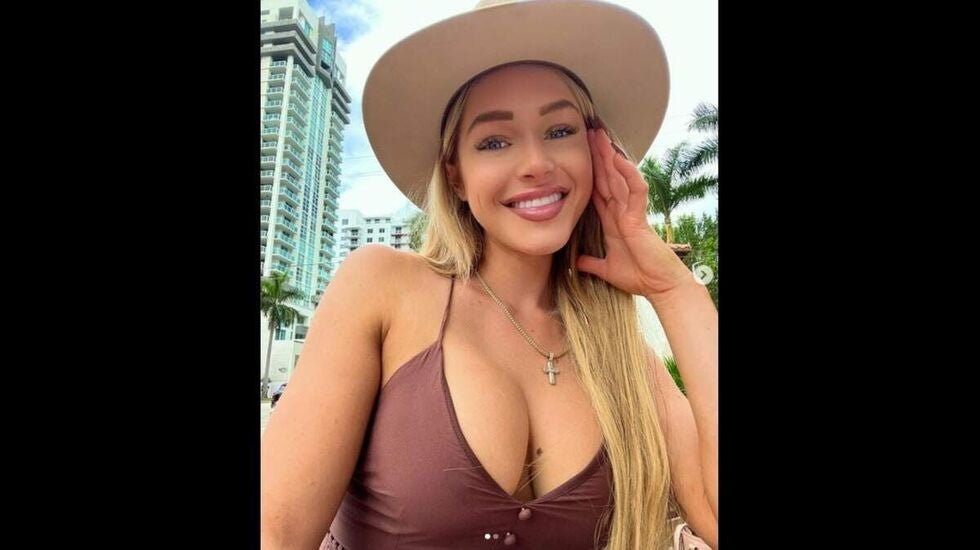
We asked if the evidence matched the story. It didn't. And now she's taking a plea.
For years, the high-profile legal battle surrounding OnlyFans model Courtney Clenney captured national headlines following the April 2022 fatal stabbing of her boyfriend, Christian "Toby" Obumseli, inside their luxury Miami condo. From day one, Clenney's defense team spun a narrative of battered spouse syndrome and frantic self-defense, claiming she hurled a knife at Obumseli from ten feet away in a desperate bid to save her own life.
It was a dramatic story designed for the court of public opinion. But criminal courtrooms aren't run on public sympathy or polished PR campaigns. They are run on physics, forensic pathology, and brutal cross-examination. When prosecutors and medical examiners looked closer at the physical reality of the crime scene, that convenient narrative completely evaporated.
Now, with a plea agreement reached and a formal sentencing hearing locked in for August 10, 2026, before Miami-Dade Judge Andrea Ricker Wolfson, the reality is setting in. As the Obumseli family's attorney confirmed, Clenney is pleading guilty and accepting full responsibility.
When the science doesn't back the story, the story collapses : whether you're an influencer in Miami or a defendant facing life-altering criminal charges right here in Indianapolis.
The Anatomy of a Collapse: When Forensics Demolish Self-Defense
In self-defense cases, defendants often believe that simply uttering the magic words: "I was defending myself": will shield them from accountability. But forensic evidence doesn't lie, and medical examiners don't care about social media status or PR spin.
In Clenney's case, the physical evidence was utterly incompatible with her version of events. Clenney originally claimed that she threw a knife at Obumseli from a distance of ten feet during a heated altercation. If true, the wound pattern would have reflected a high-velocity, erratic strike consistent with a projectile weapon.
Instead, the medical examiner's report revealed a chilling reality: a three-inch-deep, downward-thrusting stab wound directly into Obumseli's chest.
Physics and biology destroyed the defense's timeline. A knife thrown from ten feet away does not produce a deep, downward-thrusting contact wound. That trajectory requires close-range, deliberate, downward force. Once that forensic contradiction was exposed, the entire foundation of the self-defense claim disintegrated. Prosecutors didn't need to guess what happened; the victim's body told the true story.
At the Law Office of Mark Nicholson, we know that every criminal case hinges on the details. Whether you are facing charges for violent crimes, battery, or homicide, a weak defense built on shifting stories will always crumble under aggressive prosecutorial scrutiny. You need meticulous case preparation and fighters who know how to challenge every piece of forensic evidence from the ground up.
Self-Defense Under the Law: It Takes More Than an Excuse
Self-defense is a recognized legal justification, but it is not a blank check to use lethal force indiscriminately. Prosecutors and juries evaluate these claims through strict legal standards that examine proportionality, reasonableness, and the immediate threat of death or serious bodily injury.
Let's look at how this applies in our own backyard. Under Indiana law, specifically Indiana Code § 35-41-3-2, a person is justified in using reasonable force against another person to protect themselves or a third person from what they reasonably believe to be the imminent use of unlawful force. However, lethal force is only justified if the person reasonably believes that such force is necessary to prevent serious bodily injury or death.
Notice the critical keywords in the statute: reasonable belief, imminent, and necessary.
- Reasonable belief: Would a reasonable person in the exact same circumstances have reacted the same way? Or was the response wildly disproportionate to the threat?
- Imminence: Was the danger happening right now, or was it retaliatory or preemptive? Preemptive strikes do not constitute self-defense; they constitute criminal acts.
- Necessity: Was lethal force the absolute last resort, or were safe avenues of retreat and de-escalation available?
When a defendant claims self-defense, the state immediately goes to work dissecting their statements, text messages, prior altercations, and physical evidence. If your story shifts, or if forensic experts prove your version of the physical struggle is biologically impossible, your self-defense claim becomes your biggest liability.
This is precisely why anyone facing serious criminal allegations in Indiana needs expert criminal defense representation. You cannot afford a lawyer who simply accepts the state's narrative or hopes for a lucky break. You need aggressive advocates who leave no stone unturned.
High-Stakes Legal Defense: Why Thorough Preparation Wins
The Clenney case is a masterclass in why high-stakes litigation demands elite preparation. When someone faces a second-degree murder charge carrying a potential life sentence, the margin for error is zero.
Behind every plea deal in a high-profile murder trial lies months or years of grueling legal warfare. Depositions of expert witnesses, microscopic analysis of blood spatter, cell phone data extraction, and rigorous cross-examinations of police detectives build the leverage needed to either win at trial or force a reckoning.
At our Indianapolis firm, we approach every single case with that same relentless intensity. We don't wait for the prosecution to hand over their case file and hope for the best. We investigate aggressively, consult with independent forensic experts, and challenge every procedural misstep by law enforcement.
Recognized as a Top Attorney and Best Pro in Town, our firm stands out because we refuse to back down when our clients' freedom and futures are on the line. We understand that legal battles don't pause for business hours, which is why we provide 24/7 availability for consultations. When the police are knocking or an arrest has been made, every minute counts.
What the Clenney Plea Means Moving Forward
With the plea agreement finalized and the sentencing hearing scheduled for August 10, 2026, before Judge Andrea Ricker Wolfson, the criminal chapter of this tragedy is drawing to a close: though civil litigation, such as the wrongful death lawsuit filed by the Obumseli family, remains active.
The takeaway for the public and legal observers is crystal clear: The truth has a way of surfacing.
You cannot out-market bad facts. When physical evidence directly contradicts a defendant's self-defense narrative, the justice system: slowly, sometimes painfully, but inevitably: demands accountability. For Courtney Clenney, the realization that a jury would see right through the "thrown knife" fairy tale forced her hand into accepting a guilty plea and full responsibility.
Fight Back with the Law Office of Mark Nicholson
If you or a loved one are facing criminal charges in Indianapolis or anywhere across Indiana, the time to act is right now. Whether you are dealing with violent crime allegations, weapons violations, or navigating complex self-defense claims, you need a legal team that fights with unmatched aggression and precision.
Don't leave your freedom to chance. Experience award-winning advocacy, thorough case preparation, and round-the-clock support when you need it most.
Contact the Law Office of Mark Nicholson today for your confidential consultation. When your future is on the line, make sure you have the toughest advocates in your corner.


Comments
There are no comments for this post. Be the first and Add your Comment below.
Leave a Comment